
Keep Your Home Cool in Summer: If you live in Lahore, Multan, Faisalabad, or anywhere in interior Pakistan, you already know what June through August feels like.
The thermometer hits 45°C before noon. The sun turns your roof into a radiator that pumps heat into every room below it. The AC runs from morning to night and the electricity bill at the end of the month reads like a phone number. And despite all of it — the house still doesn’t feel as cool as it should.
Here’s something most Pakistani homeowners don’t realize: the temperature inside your home is not just a function of your AC unit. It’s a function of your home’s design.
The windows you chose — or didn’t choose — for sun control. The curtains that let heat flood in all afternoon. The dark-colored furniture absorbing heat. The poorly insulated roof letting the stored heat pour downward into your living spaces all night long. The gaps around doors and windows that let hot outside air seep in constantly. These design decisions — or the absence of them — determine whether your AC keeps you comfortable or simply struggles to keep up with a house that was never designed to stay cool.
At Dilaawar Interiors, we design homes in Lahore and across Pakistan that work with the climate rather than fighting it. We’ve spent years understanding how Pakistani homes heat up, where heat enters, where it accumulates, and what design interventions make the most meaningful difference to indoor comfort and energy costs.
In this complete 2026 guide, we’re sharing every expert interior design cooling strategy we use in our projects — practical, tested, and specifically calibrated for Pakistani summers. Some of these strategies cost almost nothing to implement. Others require investment but deliver savings on electricity bills that pay for themselves within one or two seasons.
Let’s get into it.
Keep Your Home Cool in Summer: Understanding Why Pakistani Homes Get So Hot — The Root Causes
Before we get into solutions, it’s worth understanding the problem clearly — because most Pakistani homeowners are treating the symptoms of a hot house rather than the causes.
The Roof is Your Biggest Problem
In Pakistani summers, your roof absorbs an extraordinary amount of solar radiation throughout the day — particularly flat concrete roofs, which are standard in Pakistani construction. Concrete has a high thermal mass — it absorbs heat slowly through the day and releases it slowly through the night. By evening, your roof slab is radiating heat downward into your top-floor rooms continuously — which is why top-floor bedrooms feel suffocating even at midnight when the outdoor temperature has dropped.
This roof heat problem affects every home in Pakistan and is the single most impactful issue to address if you want to meaningfully reduce indoor summer temperatures.
West-Facing Windows Are Heat Generators
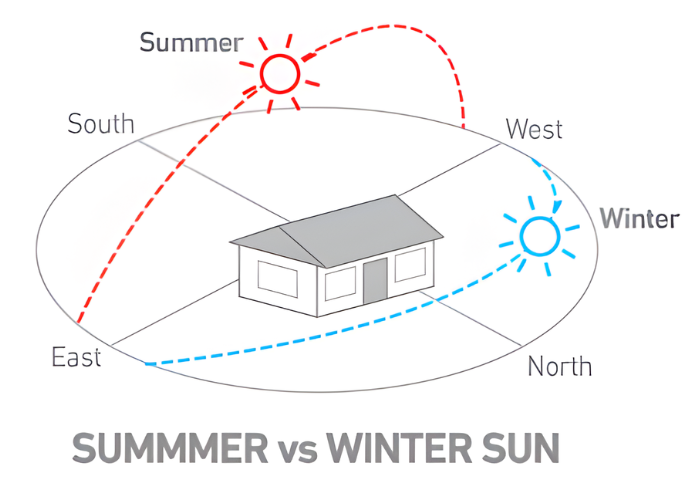
The western sun in Pakistan during June to August is relentless — and west-facing windows without external shading act as solar panels, converting afternoon sunlight directly into indoor heat. A single large west-facing window without appropriate shading can raise the temperature of an average Pakistani room by 3 to 5°C during peak afternoon hours — negating the cooling work of an AC that’s running simultaneously.
Poor Ventilation Traps Hot Air
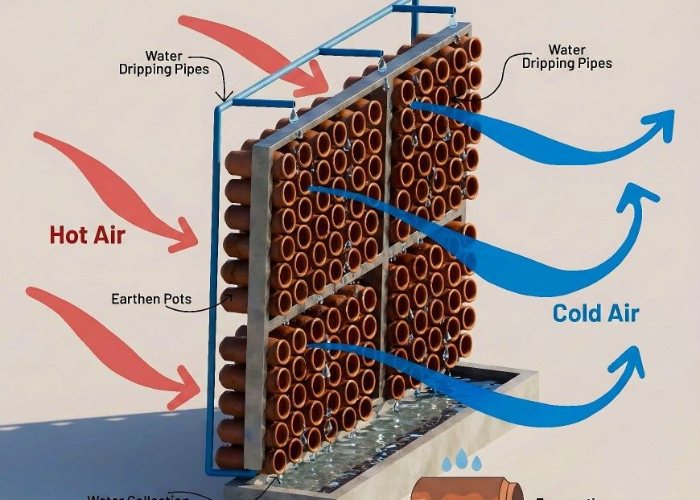
Many Pakistani homes — particularly apartments and newer constructions designed for privacy rather than cross-ventilation — have inadequate natural ventilation. Hot air that enters has nowhere to escape. The house effectively acts as a sealed box that accumulates heat through the day with no mechanism to flush it out.
AC is Cooling a Leaky House
The vast majority of Pakistani homes have significant air leakage — gaps around window frames, under door thresholds, around electrical conduits entering rooms, and through ceiling fixture cutouts. Every hour the AC runs, it is simultaneously trying to cool the room and compensate for the hot outside air constantly leaking in through these gaps. It’s like trying to fill a bucket with a hole in it.
Understanding these root causes is what allows you to make design interventions that genuinely work — rather than just running the AC harder and paying more electricity bills.
💬 Is your home genuinely difficult to keep cool despite a good AC system? The problem is almost certainly in the design, not the equipment. Dilaawar Interiors offers a home thermal assessment — we identify exactly where your home is losing the cooling battle and what design changes will make the biggest difference. 📲 WhatsApp Us for a Free Home Cooling Consultation | 📞 Call Us Today
COOLING HACK 1: Window Treatment — Your Most Powerful Defense Against Summer Heat
Your windows are the primary gateway for solar heat entering your home — and your window treatment choices are the primary line of defense against that heat. Getting this right can reduce solar heat gain through windows by 40 to 70 percent depending on the treatment chosen.
Understanding Solar Heat Gain Through Pakistani Windows
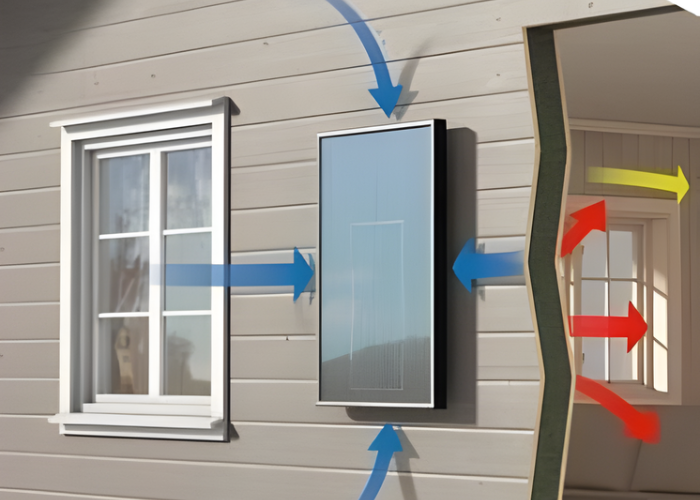
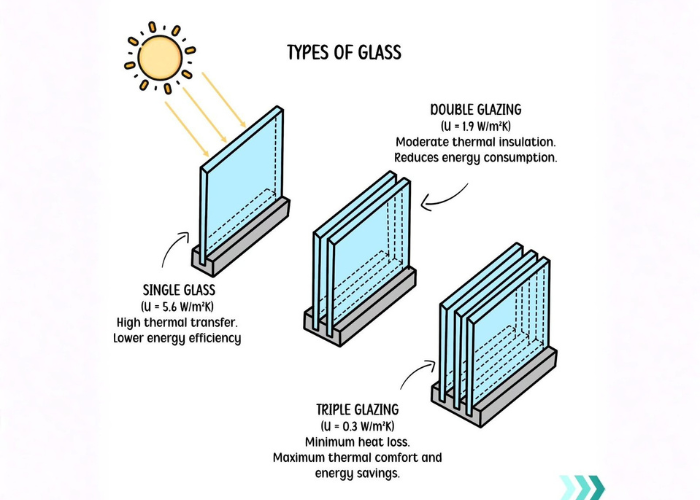
Standard single-pane glass windows — which are by far the most common in Pakistani homes — transmit a very high proportion of solar radiation directly into the room. When direct sunlight hits a person or surface inside a room through an untreated window, it generates the same radiant heat effect as standing outside in direct sun. This is why a west-facing room with large windows feels unbearably hot in the afternoon even with the AC running — the radiant heat from direct sun is simply overpowering the AC’s cooling capacity.
The fundamental principle of summer window treatment is simple: keep direct sunlight from entering the glass in the first place. Once it’s inside, it has already become heat.
External Shading — The Most Effective Solution
The single most effective window cooling strategy is external shading — because it stops solar radiation before it reaches the glass at all, rather than trying to reflect or absorb it after it has already entered the window zone.
Chajjas and overhangs — concrete or steel overhangs built above windows — are traditional in Pakistani architecture for good reason. A properly sized chajja that extends 60 to 90 cm beyond the window face blocks the high summer sun completely while allowing the lower winter sun and diffused sky light to enter. If your home was built without adequate chajjas, adding them during any renovation is one of the highest-return cooling investments you can make.
Cost range for adding concrete chajjas during renovation: PKR 3,000 – 8,000 per window depending on size and complexity
Pergolas and shade structures over terraces, balconies, and garden areas adjacent to glazed doors and windows dramatically reduce solar heat gain in the rooms behind them. A well-positioned pergola over a west-facing terrace can reduce afternoon room temperatures by 4 to 6°C in the connected interior space.
Cost range for a standard metal or wood pergola: PKR 60,000 – 2,50,000 depending on size and material
Retractable awnings over windows provide flexible external shading — extended during peak sun hours and retracted in cooler weather to allow light and warmth in during winter. They are increasingly available from local suppliers in Lahore and Karachi.
Cost range for a motorized retractable awning per window: PKR 25,000 – 80,000
Vertical louver shutters — traditional in Pakistani architecture and making a strong design comeback — provide excellent adjustable sun control on east and west facing windows while also adding a beautiful architectural element to the elevation.
Cost range for custom wooden or aluminum shutters per window: PKR 12,000 – 45,000
Curtains and Blinds — Internal Window Treatment for Pakistani Summers
When external shading isn’t possible or isn’t sufficient on its own, internal window treatments become critical. The key principle for summer curtains in Pakistan: the whiter or lighter the backing, the more solar radiation is reflected out through the glass rather than being absorbed and converted to heat inside the room.
Blackout curtains with white or silver backing are the most effective internal curtain solution for summer heat reduction in Pakistani homes. The blackout lining physically blocks light and reflects a significant proportion of solar radiation. During peak afternoon hours on west and south-facing windows, keeping blackout curtains fully closed can reduce room temperature by 2 to 4°C.
What to look for: Curtains with a white or cream blackout lining rather than a black or grey one — the lighter the backing, the more solar radiation is reflected. Cost range per window (fabric + lining + making): PKR 15,000 – 55,000
Thermal curtains incorporate an insulating interlining between the face fabric and the backing that slows heat transfer through the curtain — useful in both summer (slowing heat in) and winter (slowing heat out).
Cost range per window: PKR 20,000 – 70,000
Honeycomb cellular blinds are one of the most thermally efficient blind options available — their cellular structure traps air in pockets that act as insulation, significantly slowing heat transfer through the window zone.
Cost range per window: PKR 12,000 – 35,000 — increasingly available from Lahore suppliers
Solar sheer curtains — light-filtering sheers with a solar reflective coating — allow diffused natural light while blocking a significant proportion of direct solar radiation and UV. They maintain a bright, airy feel in the room while meaningfully reducing heat gain. Excellent for rooms where blackout curtains feel too heavy or dark.
Cost range per window: PKR 10,000 – 30,000
Reflective Window Film — An Affordable DIY Option
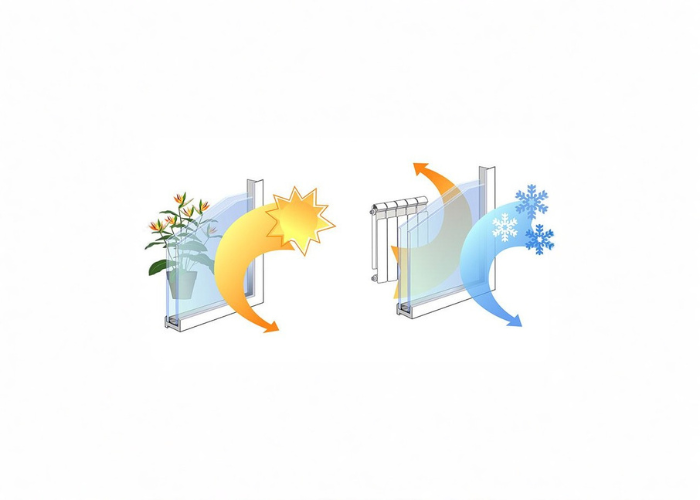
Reflective window film applied directly to the glass surface can reduce solar heat gain by 30 to 50 percent depending on the film specification. It is one of the most cost-effective window cooling solutions for Pakistani homes — particularly for apartments and rented spaces where structural external shading is not possible.
Types available in Pakistan:
Silver reflective film provides the highest solar rejection but significantly reduces natural light and gives windows a one-way mirror appearance from outside — appropriate for office buildings and ground-floor windows facing the street, less suitable for upper-floor residential rooms.
Neutral tinted film reduces heat gain by 25 to 40 percent while maintaining better visibility and a less reflective external appearance — a better balance for residential applications.
Low-E films reduce both solar heat gain and radiant heat transfer through the glass — the most technologically advanced window film option, available in Pakistan but at a higher cost.
Cost range for professional window film installation in Pakistan: PKR 300 – 900 per sq ft of glass area Cost range for a standard 4×5 foot window: PKR 6,000 – 18,000 including professional installation
Curtain Colors That Matter for Pakistani Summers
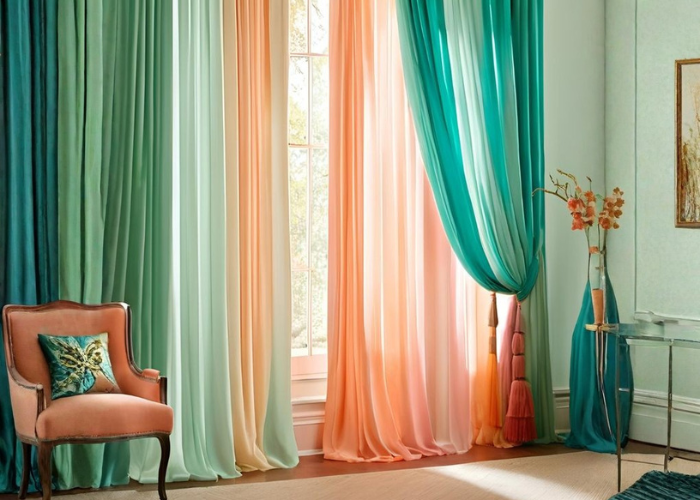
Colors to use in summer: White, ivory, cream, very light grey, pale yellow, and pale blue on the side facing the window. The lighter the color facing the glass, the more heat is reflected back out.
Colors to avoid on sunny-side windows: Dark green, navy, burgundy, chocolate brown, and black absorb solar radiation and convert it to room heat. A dark curtain on a west-facing window is literally a solar heater inside your room.
The smart approach for Pakistani homes: Use light-colored or white-backed curtains on south and west-facing windows — the high-sun-load sides — and allow yourself more color freedom on north and east-facing windows that receive less direct sun.
COOLING HACK 2: Maximize Natural Ventilation — Let Your Home Breathe
Pakistani homes that were designed before modern sealed construction methods — many of the older bungalows and courtyard houses in Lahore’s established neighborhoods — stay remarkably cool in summer without air conditioning. Their secret is cross-ventilation and stack-effect cooling — natural air movement principles that modern construction has largely abandoned in favor of sealed boxes cooled entirely by mechanical air conditioning.
Understanding and maximizing natural ventilation in your home can significantly reduce your dependence on AC — and make the AC much more effective when it does run.
Cross-Ventilation — Creating a Natural Breeze
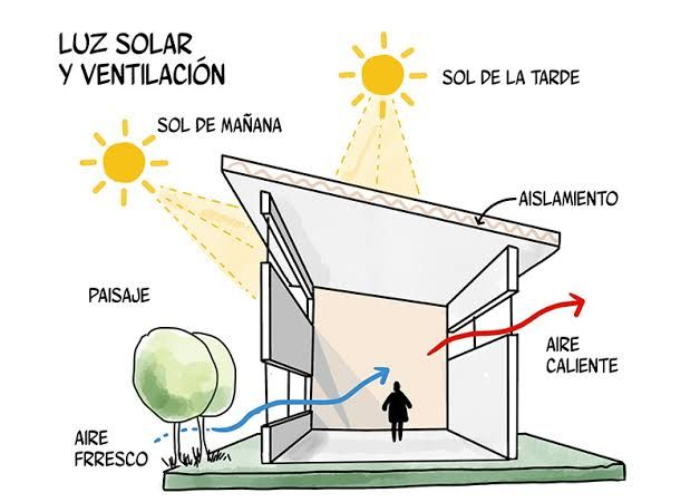
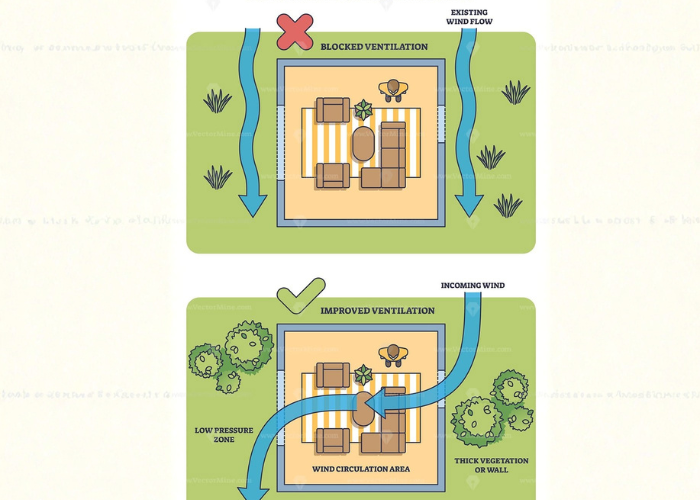
Cross-ventilation works by creating two openings on opposite sides of the house — one on the windward side where prevailing summer breeze enters, and one on the leeward side where it exits. Air naturally flows from the high-pressure windward side to the low-pressure leeward side, creating a continuous natural breeze through the interior.
How to maximize cross-ventilation in your Pakistani home:
Identify the prevailing summer wind direction for your city. In Lahore, summer winds predominantly come from the south and southwest. Open windows on the south or southwest side to admit the breeze and open windows on the north or northeast side as exit points.
If your room layout doesn’t allow direct cross-ventilation, open interior doors to create a ventilation path through multiple rooms — from a south-facing window through an open interior door to a north-facing window in the next room.
Even in fully AC-dependent homes, running the AC with windows cracked slightly on opposite sides during the brief periods when outdoor temperature drops below indoor temperature — typically between 4 AM and 7 AM in Lahore during summer — can significantly pre-cool the house before the day’s heat builds.
Ceiling Fans — The Most Underutilized Cooling Tool in Pakistan
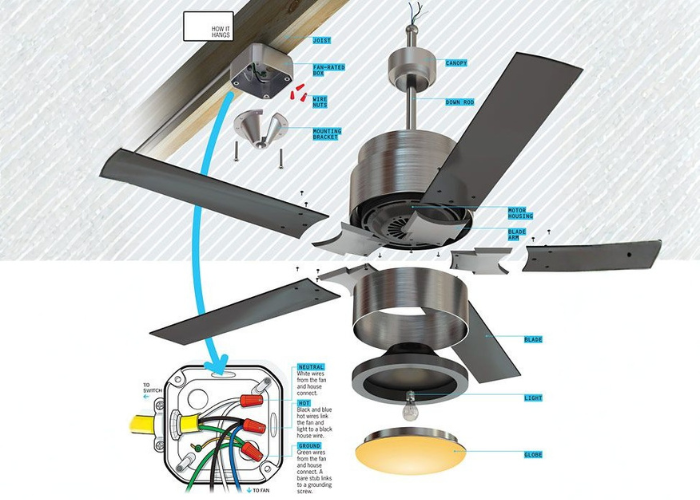
Almost every Pakistani home has ceiling fans — and almost none of them are used optimally.
The single most important ceiling fan setting for Pakistan summer: The fan must rotate counterclockwise when viewed from below. This rotation drives air downward, creating a wind-chill effect that makes the room feel 3 to 4°C cooler to the people in it — without actually reducing the air temperature at all. This wind-chill effect means you can set your AC thermostat 3 to 4°C higher than usual and feel equally comfortable — which can reduce AC electricity consumption by 15 to 25 percent.
Check your fan right now: Look up at it while it’s running. If the blades are sweeping from left to right at the front of their arc (counterclockwise from below), it’s set correctly for summer. If they’re going right to left (clockwise from below), they’re set for winter heating mode. Most Pakistani ceiling fans have a small reverse switch on the motor housing — usually a small button or sliding switch that requires a step ladder to reach.
Fan speed matters: A ceiling fan provides maximum wind-chill at high speed. Many Pakistani homeowners run fans at medium speed to reduce noise — but the cooling benefit at medium speed is significantly less than at high speed. If noise is the concern, the solution is investing in a quality low-noise fan rather than running a noisy fan at lower speed.
Energy cost of a ceiling fan running 24 hours: Approximately PKR 20 – 40 per day — compared to PKR 200 – 500 per day for a 1.5-ton AC. Using fans strategically to allow the AC to run less is one of the highest-return electricity saving strategies in Pakistani homes.
Strategic Window and Ventilator Placement for New Construction
If you’re building a new home or doing a major renovation with Dilaawar Interiors, we incorporate ventilation strategy into the architectural design from the very beginning — because it’s significantly easier and cheaper to design ventilation properly than to try to retrofit it later.
Roof vents and ridge ventilators allow hot air trapped in the roof structure to escape continuously — reducing the heat load transferred from the roof into the rooms below by 20 to 35 percent.
High-level windows or ventilators near the ceiling allow hot air — which naturally rises — to escape while cooler air enters through lower openings. This stack-effect ventilation works even on still days with no wind.
Internal courtyard designs, where possible, create a natural heat chimney — the courtyard heats up and draws hot air upward and out, inducing cool air movement around it into the surrounding rooms.
💬 Building a new home or doing a major renovation in Lahore? Let our architects design the natural ventilation strategy into your home from the ground up — so you stay cool with less AC dependency for the lifetime of the building.
📞 Book Your Free Architecture and Design Consultation
COOLING HACK 3: Roof and Wall Insulation — Stopping Heat Before It Enters
We established at the beginning of this guide that the roof is the biggest heat problem in Pakistani homes. Here are the specific design interventions that address it most effectively.
Roof Waterproofing and Heat Reduction Solutions
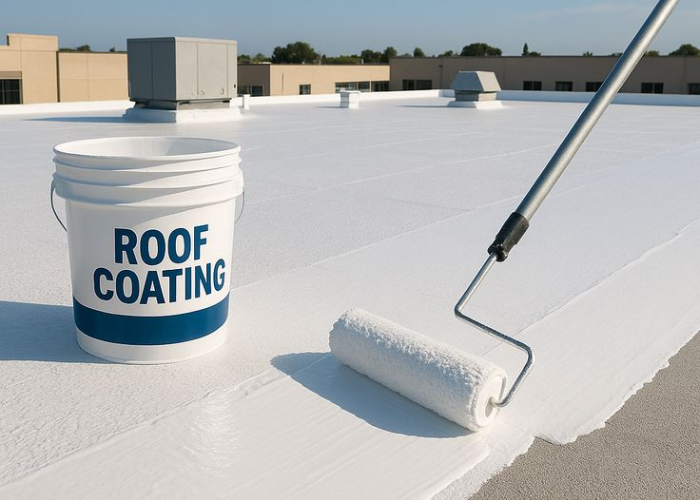
White or reflective roof coating is one of the simplest, most affordable, and most effective heat reduction interventions available to Pakistani homeowners. Applying a high-quality white elastomeric waterproofing coating to a flat concrete roof reflects 70 to 85 percent of solar radiation rather than absorbing it — compared to a standard grey concrete roof that absorbs 70 to 80 percent. This single intervention can reduce top-floor room temperatures by 3 to 6°C during peak afternoon hours.
Cost range for professional white reflective roof coating application: PKR 25,000 – 80,000 for a standard 5 marla roof area — including surface preparation and two coats Additional benefit: The same treatment provides excellent waterproofing protection against monsoon seepage
Roof insulation boards — extruded polystyrene (XPS) or expanded polystyrene (EPS) insulation boards installed above the roof slab under the waterproofing layer — significantly slow heat transfer from the hot roof surface into the rooms below. This is the most effective single thermal intervention for top-floor rooms in Pakistani homes.
Cost range for roof insulation board installation: PKR 80 – 180 per sq ft of roof area depending on insulation thickness and material For a standard 5 marla roof: PKR 60,000 – 1,50,000 complete
Green roofs — a growing layer of plants and planting medium on the roof surface — provide excellent thermal insulation through both the insulating effect of the planting medium and the evaporative cooling from the plants themselves. A well-established green roof can reduce top-floor temperatures by 4 to 8°C. They also look beautiful, improve air quality, and provide a usable outdoor space.
Cost range for a basic green roof installation: PKR 1,50,000 – 5,00,000 depending on size, planting complexity, and structural requirements
False ceiling with insulation — installing a false ceiling in top-floor rooms creates an air gap between the roof slab and the room’s ceiling surface that acts as thermal insulation. Adding insulation material within the false ceiling void dramatically increases this effect. Even a plain gypsum false ceiling without insulation material reduces the perceived heat from the roof slab by creating a thermal break.
Cost range for a false ceiling with thermal insulation in a top-floor bedroom: PKR 55,000 – 1,20,000
Wall Insulation Options for Pakistani Homes
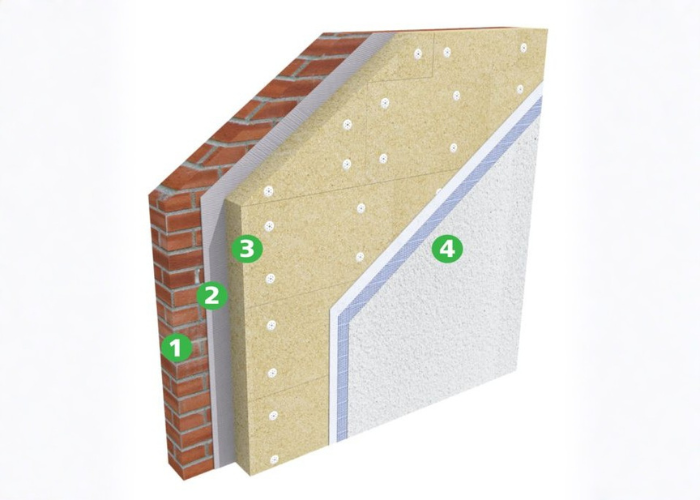
Cavity wall construction — building exterior walls with an air gap between two layers of masonry — provides good thermal insulation and is increasingly used in quality new construction in Lahore. For existing homes, cavity insulation can be injected into existing wall cavities where they exist.
External wall insulation systems — insulation boards fixed to the exterior of existing walls, rendered over to create an insulated external surface — can be applied to existing buildings during exterior renovation. This is a more significant intervention but provides excellent thermal performance improvement.
Internal insulation — insulation boards fixed to the internal face of hot exterior walls, usually on south and west-facing walls, and finished with plasterboard — is the most accessible retrofit insulation option for existing Pakistani homes. It reduces the wall’s internal face from a heat radiator to a cool, insulated surface.
Cost range for internal wall insulation and finishing per wall: PKR 15,000 – 45,000 depending on wall size and insulation material
Sealing Air Leaks — The Affordable Quick Win
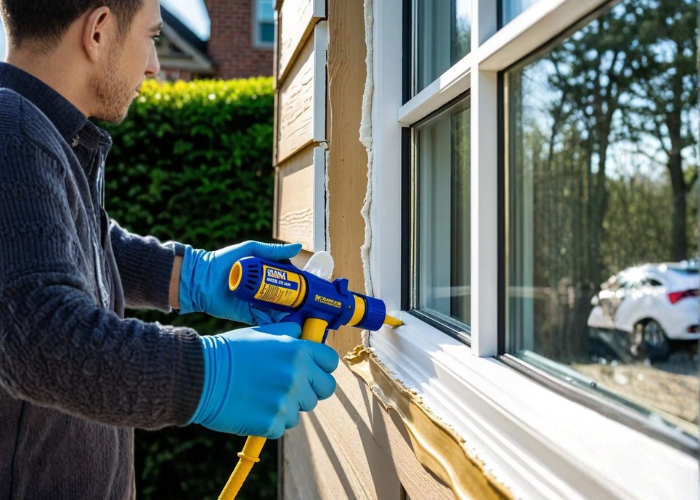
Before investing in expensive insulation, sealing existing air leaks in your home is the highest-return, lowest-cost intervention available. In a typical Pakistani home, air leaks around windows, under doors, around electrical conduit entries, and through ceiling fixture cutouts collectively account for a significant proportion of the cooling load the AC is fighting.
Door and window sealing: Self-adhesive foam weather stripping around door and window frames costs PKR 500 – 2,000 per door or window and can be applied in 15 minutes by any homeowner. This is the single most cost-effective cooling intervention in this entire guide.
Under-door draft excluders — fabric or rubber seals that block the gap under exterior doors — cost PKR 1,000 – 3,000 per door and eliminate a significant source of hot air entry.
Silicone sealant around window frames where they meet the wall — applied to any visible gaps or cracks — costs PKR 2,000 – 5,000 for a complete home treatment and provides immediate results.
Total cost for comprehensive air sealing of a standard Pakistani home: PKR 8,000 – 25,000 — one of the best cooling investments available per rupee spent
COOLING HACK 4: Interior Design Choices That Keep Pakistani Homes Cooler
Beyond structural interventions, the interior design of your home — the colors, materials, furniture, and finishes you choose — has a meaningful impact on how cool your home feels and stays.
Color Psychology and Summer Heat — Choosing the Right Palette

Color does not directly change the temperature of a room — but it profoundly affects the perceived temperature, and in the context of a Pakistani summer, perceived temperature is what determines whether a room feels tolerable or unbearable.
Cool colors for Pakistani summer interiors:
Blues, blue-greens, and cool grey-blues are psychologically the most cooling colors available. Studies consistently show that people in rooms painted in cool blue tones perceive the temperature as 2 to 3°C lower than in rooms painted in warm colors at identical actual temperatures. For Pakistani rooms that receive western afternoon sun, a cool blue palette is one of the simplest and most effective ways to make the space feel more comfortable.
Soft whites and very light cool greys reflect maximum light and create a bright, airy feeling that reads as cool and spacious — the opposite of the heavy, closed-in feeling that makes a hot room feel even more oppressive.
Sage green and eucalyptus tones are psychologically associated with shade, nature, and coolness — another excellent palette direction for Pakistani summer-focused bedroom and living room designs.
Colors to approach carefully in sun-heavy rooms:
Deep terracotta, burnt orange, warm mustard, and rich burgundy are psychologically warming colors — they read as hot, energetic, and stimulating. In a room that already receives significant solar heat gain, these tones amplify the discomfort. They can be used successfully in north-facing rooms that receive little direct sun but are best avoided in south and west-facing spaces in Pakistani homes.
Color consultation and painting cost for a standard Pakistani room: PKR 12,000 – 35,000 depending on room size, paint brand, and finish
Flooring Choices and Summer Comfort
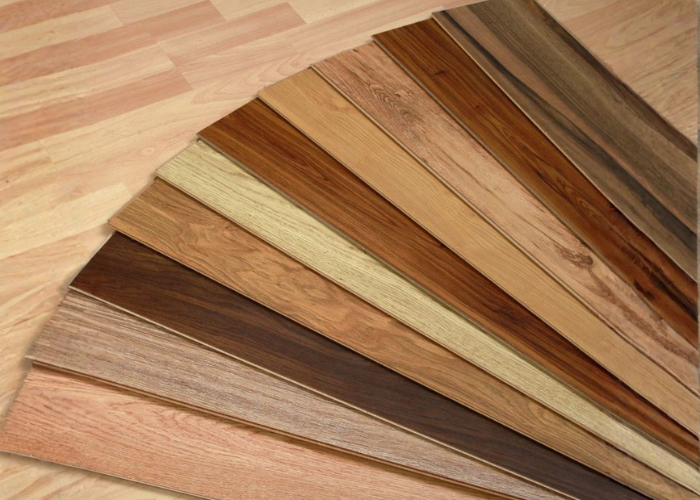
Pakistani summers make flooring a critical design choice. Different floor materials behave very differently under Pakistan’s temperature extremes.
Marble and natural stone remain the best summer flooring choice for Pakistani homes — they stay genuinely cool to the touch and provide a refreshing underfoot experience that is irreplaceable in Pakistan’s heat. The cool surface of marble under bare feet in a Pakistani summer morning is one of the most distinctly Pakistani comfort experiences. The downside is cost and cold in winter — addressed with rugs during cooler months.
Marble flooring cost: PKR 300 – 900 per sq ft depending on marble quality and source
Ceramic and porcelain tiles provide similar coolness to marble at significantly lower cost. Large-format tiles (60×60 cm or larger) with minimal grout lines look most elegant and are easier to maintain. Light-colored tiles reflect more light and feel cooler underfoot than dark ones.
Tile flooring cost: PKR 80 – 350 per sq ft depending on tile quality
Wood and laminate flooring retains heat more than stone or tile and feels warmer underfoot — which is actually a disadvantage in Pakistani summers but an advantage in winter. If you love the look of wood flooring, it works best in bedrooms where it’s covered with an area rug during summer, or in rooms that are primarily used in cooler months.
Engineered wood flooring cost: PKR 250 – 600 per sq ft
Wall-to-wall carpet is the worst flooring choice for Pakistani summer comfort — it retains heat, traps dust and allergens that worsen in summer, and is extremely difficult to keep clean in Lahore’s dusty environment. We strongly advise against carpeting any room in a Pakistani home that is used year-round.
Furniture Materials and Summer Heat
Furniture material choices affect both actual room temperature and perceived comfort during Pakistani summers.
Natural wood furniture is the most climate-appropriate choice for Pakistani homes — wood does not retain heat the way metal or dark upholstered surfaces do, and it has natural thermal regulation properties that make wooden surfaces comfortable to touch even in summer heat. Light-toned wood finishes reflect more heat than dark walnut or sheesham finishes.
Metal furniture — particularly dark powder-coated steel and iron — absorbs and retains heat significantly. Metal outdoor furniture brought indoors during summer will be uncomfortably hot to the touch for most of the day. If you love metal accents, choose them for legs and hardware rather than primary seating and surface materials.
Dark upholstered furniture — particularly in synthetic velvet, dark leather, or heavily padded microfiber — absorbs heat and retains it. A dark velvet sofa in a south-facing Pakistani drawing room becomes genuinely uncomfortable to sit on during afternoon hours if the room has been closed and heated. For sun-heavy rooms, choose lighter upholstery colors and natural breathable fabrics.
Rattan, cane, and wicker furniture — traditional in Pakistani outdoor and informal spaces — are actually excellent interior furniture materials for summer-focused design. They are lightweight, breathe naturally, don’t retain heat, and add a relaxed, breezy aesthetic quality to interior spaces. Their popularity in Pakistani interior design is growing precisely because they suit the climate so well.
Indoor Plants — Natural Cooling and Air Purification

Plants release moisture through their leaves in a process called transpiration — which has a genuine, measurable cooling effect in enclosed indoor spaces. A room with several medium to large indoor plants will consistently read 1 to 2°C cooler in humidity-normalized comfort terms than an identical room without plants.
Beyond the cooling effect, indoor plants improve air quality by absorbing carbon dioxide and releasing oxygen, and by filtering certain VOCs (volatile organic compounds) emitted by furniture and finishes — a meaningful benefit in Pakistani homes that tend to be tightly shut during summer months.
Best indoor plants for Pakistani summer homes:
Snake plants (Sansevieria) are virtually indestructible in Pakistani conditions — they tolerate low light, irregular watering, and temperature extremes. They release oxygen particularly efficiently and are one of the best air-purifying plants available.
Peace lilies thrive in indirect light and moderate temperatures and produce beautiful white flowers. They are excellent air purifiers and their transpiration rate is high, contributing meaningfully to indoor humidity and cooling.
Areca palms are one of the most effective indoor transpiration plants — a large areca palm transpires approximately one liter of water per day into the indoor air, providing meaningful humidity and cooling in a dry Pakistani room with the AC running.
Aloe vera is a low-maintenance succulent that tolerates Pakistani summer conditions well and has the added practical benefit of providing natural soothing gel for sun-related skin issues.
Budget for a comprehensive indoor plant selection for a Pakistani home: PKR 5,000 – 35,000 depending on plant sizes and decorative pot selections
COOLING HACK 5: Smart AC Usage — Getting Maximum Cooling at Minimum Cost
Most Pakistani homeowners pay more for air conditioning than they need to — not because their AC is undersized or old, but because the house around it is working against it, and because the AC itself is not being used optimally.
[H3] The Right AC Temperature Setting for Pakistan
The optimal thermostat setting for Pakistani summer comfort, validated by energy efficiency research, is 26°C (78.8°F) — not the 18°C or 20°C that many Pakistani families set habitually. The difference in electricity consumption between 26°C and 20°C is enormous — each degree lower increases electricity consumption by approximately 6 to 8 percent.
At 26°C with a ceiling fan running on high, a properly sealed and shaded room will feel comfortably cool. The ceiling fan’s wind-chill effect makes 26°C feel approximately equivalent to 22°C without a fan — at a fraction of the electricity cost.
Electricity saving from changing AC setting from 22°C to 26°C: Approximately 24 to 32 percent reduction in AC electricity consumption
AC Maintenance — The Free Cooling Upgrade

A dirty AC filter forces the unit to work significantly harder to push the same volume of air through the system — reducing cooling output while increasing electricity consumption. Cleaning the AC filter is the single most impactful free maintenance action you can take.
AC maintenance schedule for Pakistani summers:
Clean the air filter every 2 to 3 weeks during peak summer usage — monthly in moderate-use periods. In Lahore’s dusty environment, filters block significantly faster than the 30-day recommendation that most manufacturers quote for clean-air environments.
Have the AC serviced professionally at the beginning of every summer — checking refrigerant levels, cleaning the outdoor condenser coils, and verifying that the unit is operating at rated efficiency.
Ensure the outdoor condenser unit has adequate shade and airflow. A condenser in direct afternoon sun operates at significantly reduced efficiency. Building a shade structure over the outdoor unit — while maintaining adequate airflow clearance — can meaningfully improve its efficiency.
Professional AC service cost in Pakistan: PKR 2,500 – 8,000 per unit depending on AC type and service scope
Zonal Cooling — The Pakistani Summer Strategy
Running AC in every room of a large Pakistani home simultaneously is extraordinarily expensive. Zonal cooling — cooling only the rooms being actively used and keeping other rooms closed — is one of the most significant electricity saving strategies available.
The key to effective zonal cooling is ensuring each zone is well-sealed and well-insulated so that when it’s being cooled, it holds that coolness. A well-sealed bedroom cooled to 26°C with the door closed will maintain that temperature for 30 to 45 minutes after the AC is switched off — allowing intermittent operation rather than continuous running.
Programmable AC timers — available on most modern split units and as third-party additions to older units — allow the bedroom AC to start 30 minutes before sleep time, run until the room is comfortable, then operate intermittently to maintain temperature through the night rather than running continuously.
Electricity saving from switching to zonal cooling in a 4-5 bedroom Pakistani home: 35 to 55 percent reduction in AC-related electricity consumption
COOLING HACK 6: Night Cooling Strategy — Using Pakistan’s Cooler Nights
Lahore’s summer nights — particularly from 2 AM onwards — drop to temperatures between 28°C and 34°C depending on the month. While still warm, this is significantly cooler than the 43 to 46°C daytime peaks. Smart nighttime cooling strategy uses this temperature differential to significantly reduce daytime cooling load.
Night Ventilation Pre-Cooling
The strategy: Open windows at 2 to 4 AM when outdoor temperature is at its minimum, run ceiling fans on high to flush hot indoor air out and draw cooler night air in, then close windows and curtains before the outdoor temperature begins rising again — typically 6 to 7 AM. This pre-cools the building’s thermal mass — the concrete walls, floors, and slab — which then acts as a heat sink through the morning, absorbing heat from the interior rather than radiating it.
In a well-insulated home with good window sealing, this nighttime pre-cooling strategy can delay the point at which AC becomes necessary in the morning by 2 to 3 hours — a meaningful electricity saving in Pakistani summer.
Bedroom Cooling for Better Sleep in Pakistani Summers
Sleep quality in Pakistani summers is a genuine health issue — not just a comfort issue. Chronic poor sleep from heat causes fatigue, mood disorders, and impaired cognitive function that affects daily life significantly.
Design interventions specifically for Pakistani bedroom sleeping comfort in summer:
Breathable natural bedding — 100% cotton or linen sheets with a thread count between 200 and 400 — allows body heat and moisture to escape rather than trapping it. The difference between sleeping on synthetic bedding and quality cotton in a Pakistani summer is extraordinary and cannot be overstated.
Quality cotton bedding set (fitted sheet, flat sheet, two pillowcases): PKR 8,000 – 35,000
A dedicated bedside table fan positioned to blow air across the sleeping area provides additional wind-chill cooling beyond what a ceiling fan achieves — particularly valuable on very hot nights when the AC needs support.
Cooling pillowcase materials — bamboo-derived or moisture-wicking fabrics — stay noticeably cooler than standard cotton against the face and head, where most people feel heat most acutely during sleep.
Blackout curtains in the bedroom prevent early morning eastern sun from heating the room before you wake — allowing the AC to maintain comfortable sleeping temperatures without working harder against solar gain in the early morning hours.
COOLING HACK 7: Reducing Indoor Heat Sources — Often Overlooked but Highly Effective
Every electrical device in your home generates heat as a byproduct of operation — even when it seems to produce nothing but light, sound, or data. In a well-sealed Pakistani home during summer, this accumulated internal heat generation adds meaningfully to the cooling load the AC must overcome.
Lighting — Switching to LED Across Your Entire Home
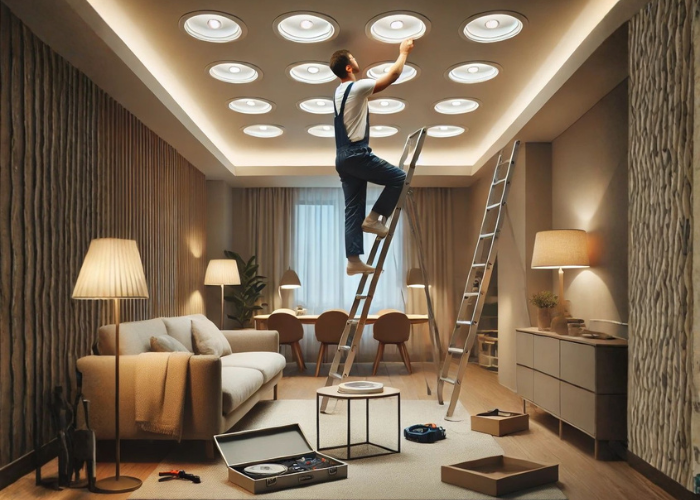
If you still have any incandescent or halogen bulbs in your home — in cupboards, display niches, bathrooms, or anywhere — replacing them with LED equivalents is a significant summer cooling action as well as an electricity saving measure.
Incandescent bulbs convert only 5 to 10 percent of their electricity consumption into light — the remaining 90 to 95 percent becomes heat, radiated directly into the room. A single 60-watt incandescent bulb running for 8 hours generates approximately the same heat as a small room heater running for 30 minutes. LED equivalents producing the same light output generate 80 percent less heat.
A complete whole-home LED conversion cost: PKR 8,000 – 25,000 depending on home size and bulb types Annual electricity saving from LED conversion in a standard Pakistani home: PKR 15,000 – 40,000 LED bulb lifespan: 15,000 to 25,000 hours — compared to 1,000 hours for incandescent
Kitchen Design — Keeping Cooking Heat Out of Living Spaces
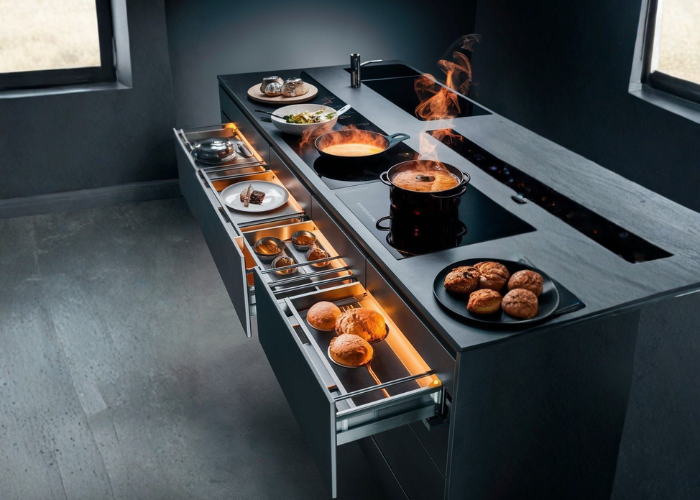
Kitchen cooking generates enormous heat — a gas stove running for 45 minutes raises kitchen temperature by 5 to 8°C above the rest of the house. In Pakistani homes, this kitchen heat frequently spreads into adjacent dining and living areas, adding significantly to the overall cooling load.
Design solutions that minimize kitchen heat spread:
A well-designed kitchen exhaust system — either a powerful range hood directly above the cooking area or a whole-kitchen exhaust fan — is the single most effective kitchen cooling intervention. It captures cooking heat at the source and expels it directly outside before it can spread into living spaces.
Quality kitchen range hood cost: PKR 15,000 – 80,000 depending on size, power, and brand
A well-sealed kitchen door — or a thoughtfully designed transition zone between kitchen and living areas in open-plan homes — prevents cooking heat from flowing freely into the rest of the house.
Shifting cooking-intensive meal preparation to early morning or evening hours — when outdoor temperatures are lower and the kitchen’s heat generation is more easily managed — is a behavioral strategy that significantly reduces midday cooling load in the kitchen and adjacent spaces.
Electronics and Appliances — Standby Power and Heat Generation

Electronic devices in standby mode — televisions, satellite receivers, chargers, gaming consoles, and desktop computers — collectively generate a surprising amount of heat in Pakistani homes. A typical Pakistani drawing room with a large TV, a satellite receiver, a gaming console, and a WiFi router running continuously generates 80 to 150 watts of continuous heat — equivalent to a light bulb running 24 hours a day.
Switching off devices completely rather than leaving them in standby — using smart power strips that eliminate standby power consumption automatically — reduces both electricity consumption and indoor heat generation.
Smart power strip cost: PKR 3,000 – 8,000 — available from major electronics retailers in Lahore and Karachi
Pakistani Home Cooling — Room-by-Room Priority Guide
Drawing Room Cooling Priority
The drawing room is the most socially important room in a Pakistani home — and the room where cooling failures are most visible to guests. Priority interventions for drawing room cooling: window shading and curtaining first (typically the largest heat gain source), then ceiling fan optimization, then AC thermostat setting, then furniture material and color choices.
Drawing room cooling upgrade budget: PKR 50,000 – 2,00,000 depending on window count and intervention scope
Master Bedroom Cooling Priority
Sleep quality makes bedroom cooling a health priority. Priority interventions: blackout curtains (prevent early morning solar heat gain), AC thermostat optimization with ceiling fan (achieve comfort at 26°C rather than 20°C), roof insulation above bedroom if top floor, and breathable bedding.
Master bedroom cooling upgrade budget: PKR 35,000 – 1,50,000
Kitchen Cooling Priority
Priority interventions: powerful exhaust hood installation, sealing the kitchen from living areas, LED conversion throughout, and behavioral cooking time shifting.
Kitchen cooling upgrade budget: PKR 20,000 – 90,000
Top Floor Rooms — The Hardest to Cool
Top floor rooms need roof-level intervention first — reflective roof coating and/or insulation — before any interior interventions will be fully effective. Without addressing the roof heat source, interior interventions are fighting an uphill battle.
Top floor room cooling upgrade budget (including roof coating): PKR 80,000 – 3,00,000 depending on roof area and interior scope
Complete Summer Cooling Investment Guide — PKR Cost Summary for 2026
| Intervention | Cost Range | Cooling Impact | ROI Timeline |
| Air leak sealing (full home) | PKR 8,000 – 25,000 | High | 1 season |
| LED conversion (full home) | PKR 8,000 – 25,000 | Moderate | 1-2 seasons |
| Reflective roof coating | PKR 25,000 – 80,000 | Very High (top floor) | 2-3 seasons |
| Blackout curtains (per window) | PKR 15,000 – 55,000 | High | 1-2 seasons |
| Window film (per window) | PKR 6,000 – 18,000 | Moderate-High | 1-2 seasons |
| External shading / chajja | PKR 3,000 – 8,000 per window | Very High | 2-3 seasons |
| Ceiling fan optimization | PKR 0 (setting change) | Moderate | Immediate |
| Roof insulation boards | PKR 60,000 – 1,50,000 | Very High | 3-5 seasons |
| False ceiling with insulation | PKR 55,000 – 1,20,000 | High | 3-4 seasons |
| Indoor plants (full home) | PKR 5,000 – 35,000 | Low-Moderate | Ongoing |
| AC professional service | PKR 2,500 – 8,000 | Moderate | Immediate |
| Pergola or shade structure | PKR 60,000 – 2,50,000 | Very High | 3-5 seasons |
💬 Not sure which cooling interventions are the highest priority for your specific home? Dilaawar Interiors offers a complete home thermal assessment — we identify exactly where your home is losing the cooling battle and give you a prioritized, budgeted action plan. 📲 Book Your Free Home Cooling Assessment — WhatsApp Us Now
How Dilaawar Interiors Designs Cool Pakistani Homes
At Dilaawar Interiors, summer heat performance is built into every home design project from the very first concept stage — not treated as an afterthought or left to the homeowner to figure out after construction.
Climate-Responsive Design From Day One
Every new build and major renovation project we undertake begins with a site orientation analysis — understanding exactly where the sun falls on the building throughout the day and across seasons. This analysis directly informs window placement and sizing, external shading design, roof treatment specification, and ventilation strategy — all of which are designed into the building from the beginning rather than retrofitted later at significantly greater cost and lesser effectiveness.
Material Specification With Pakistan’s Climate in Mind
Every material we specify — from roof finishes and external wall treatments to internal flooring, fabrics, and furniture — is evaluated for its thermal performance in Pakistani conditions as well as its aesthetic quality. We never specify materials that look beautiful in a European design magazine but perform poorly in a Lahore summer.
Integrated Interior Design and Architecture
Because Dilaawar Interiors provides both architectural and interior design services under one roof, our thermal design decisions carry through consistently from the building envelope to the interior finishes. The window shading designed by our architect coordinates with the curtain specification designed by our interior designer. The roof insulation specified by our construction team coordinates with the false ceiling design and integrated lighting plan. This integration produces homes that perform better because every system is designed to work together.
Frequently Asked Questions — Keeping Pakistani Homes Cool in Summer
What is the single most effective thing I can do to keep my home cooler in Pakistani summer?
For most Pakistani homes, the single highest-impact intervention is addressing the roof heat problem — applying a reflective white waterproofing coating to flat roof surfaces. This alone can reduce top-floor room temperatures by 3 to 6°C during peak afternoon hours and significantly reduces the cooling load on the AC. Combined with air leak sealing around doors and windows (which can be done for under PKR 25,000), these two interventions deliver more cooling improvement per rupee than almost anything else available.
How much does it cost to properly cool proof a Pakistani home?
A basic cooling upgrade — air leak sealing, reflective roof coating, LED conversion, and optimized window treatments — can be achieved for PKR 80,000 to PKR 2,00,000 for a standard 5 Marla home. A comprehensive upgrade including roof insulation, external shading, false ceilings with insulation, and complete interior redesign can range from PKR 4,00,000 to PKR 15,00,000 or more depending on home size and specification level.
Do window films work in Pakistan?
Yes — quality reflective or low-E window films measurably reduce solar heat gain through glass by 25 to 50 percent depending on film type and window orientation. They are most effective on south and west-facing windows that receive direct afternoon sun. Professional installation is recommended for best results. The investment typically pays back in electricity savings within 1 to 2 seasons for high-sun-load windows.
Should I use a ceiling fan with AC in Pakistan?
Absolutely yes — and this is one of the most underutilized electricity saving strategies in Pakistani homes. Running a ceiling fan with AC on counterclockwise rotation creates a wind-chill effect that makes 26°C feel as comfortable as 22°C without a fan. This allows raising the AC thermostat by 3 to 4°C, reducing electricity consumption by 18 to 24 percent — for the minimal running cost of a ceiling fan (PKR 20 to 40 per day). Always run AC and ceiling fan together.
What is the best AC temperature setting for Pakistan summer?
26°C (78.8°F) is the optimal balance between comfort and energy efficiency in a Pakistani home that has good ceiling fans, reasonable insulation, and controlled solar heat gain. Many Pakistani families habitually set AC to 18-20°C and pay dramatically more in electricity bills as a result. With ceiling fans running and basic window shading in place, 26°C is genuinely comfortable for most people — and the electricity savings are substantial.
How can I keep a top-floor room cool in Pakistan?
Top-floor rooms require a multi-pronged approach. First, address the roof — apply reflective coating and/or insulation to the roof surface above the room. Second, install a false ceiling below the slab to create a thermal break. Third, ensure the room has good cross-ventilation and can be night-ventilated in the early morning hours. Fourth, use reflective window treatments on all sun-facing windows. Combined, these interventions can make a top-floor Pakistani room genuinely comfortable in summer rather than the furnace most currently are.
What interior colors make a Pakistani home feel cooler in summer?
Cool blues, blue-greens, sage greens, pale greys, and soft whites are the most psychologically cooling color choices for Pakistani summer interiors — research shows people perceive temperatures in cool-toned rooms as 2 to 3°C lower than in warm-toned rooms at identical actual temperatures. For sun-heavy south and west-facing rooms, choosing a cool palette makes a meaningful and cost-free (beyond the paint itself) contribution to perceived comfort. Avoid warm reds, oranges, and deep yellows in rooms that already receive heavy afternoon sun.
Can Dilaawar Interiors design my home to require less AC?
Yes — this is one of the explicit design goals we pursue in every new build and major renovation project. Through careful site orientation analysis, strategic window placement and shading design, appropriate roof treatment specification, natural ventilation strategy, material selection, and integrated interior design, we design homes that stay naturally cooler — requiring less AC operation and achieving comfortable temperatures with significantly lower electricity consumption. Contact us to discuss your project.
Ready to Design a Home That Stays Cool Without Breaking Your Electricity Budget?
At Dilaawar Interiors, we design homes that work with Pakistan’s climate — not against it. Whether you’re building a new home, planning a major renovation, or simply looking for the most impactful improvements to make your existing home more bearable in summer, our design team has the expertise to help you find the right solutions for your specific home, budget, and situation.
What you get when you work with us on a cooling-focused project:
- ✅ Free initial consultation and home thermal assessment
- ✅ Site-specific analysis of where your home is losing the cooling battle
- ✅ Prioritized, budgeted action plan — starting with highest ROI interventions
- ✅ Complete design and specification services for all cooling interventions
- ✅ Trusted contractors for roof coating, insulation, window treatment, and interior work
- ✅ Transparent PKR pricing on all recommended interventions before you commit
📞 Call Us: +923111147157
💬 WhatsApp: +923111147157
🌐 Website: dilaawarinteriors.com
📍 Visit Us:, Lahore, Pakistan
📧 Email: info@dilaawarinteriors.com
👉 Book Your Free Home Cooling Assessment Today
Written by the Design Team at Dilaawar Interiors— Lahore’s trusted name in affordable elegance. Have a question about keeping your home cool this summer? Drop it in the comments below and our team will respond within 24 hours. 💬