Complete Guide to Door Types: Doors are more than functional barriers—they’re design statements that define your home’s character and flow. The right door can elevate a room’s aesthetic, improve privacy, enhance soundproofing, and even increase your property’s value. However, with numerous construction types and design styles available, choosing the perfect door can feel overwhelming.
At Dilawar Interiors, we’ve installed and designed countless door solutions across residential and commercial projects. In this comprehensive guide, we’ll walk you through the three main door construction types and nine stunning design styles to help you make informed decisions for your spaces.
Complete Guide to Door Types: Understanding Door Construction Types
Before diving into design aesthetics, it’s crucial to understand how doors are constructed. The three primary construction types are solid doors, semi-solid doors, and engineered doors—each offering distinct advantages in terms of durability, cost, and performance.
1. Solid Doors: Premium Strength and Durability
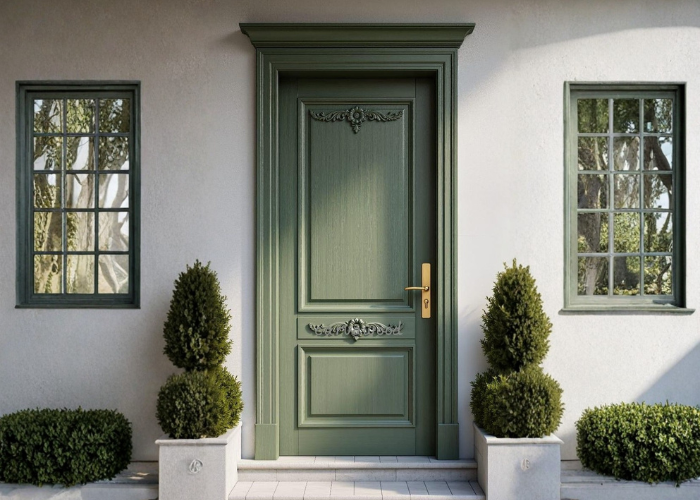
What They Are: Solid doors are constructed entirely from natural wood, with no hollow spaces or filler materials. They can be made from a single piece of wood or multiple pieces joined together, featuring solid wood throughout the entire door thickness.
Construction: These doors are typically crafted from hardwoods like oak, walnut, teak, mahogany, or pine. The door core, rails, stiles, and panels are all made from genuine wood, making them the heaviest and most substantial option available.
Advantages:
- Superior durability: Can last decades with proper maintenance
- Excellent soundproofing: The solid construction blocks noise effectively
- Enhanced security: Difficult to break or damage
- Thermal insulation: Provides better temperature control
- Luxury appeal: Offers premium aesthetics and feel
- Can be refinished: Sanding and restaining is possible multiple times
Disadvantages:
- High cost: Most expensive option due to quality materials
- Heavy weight: Requires sturdy frames and heavy-duty hinges
- Maintenance: Needs periodic treatment to prevent warping or cracking
- Susceptible to moisture: Can expand or contract with humidity changes
Best For: Master bedrooms, main entrance doors, executive offices, luxury homes, and spaces where sound insulation and durability are priorities. Solid doors are ideal when budget allows for premium quality and long-term investment.
2. Semi-Solid Doors: The Balanced Choice
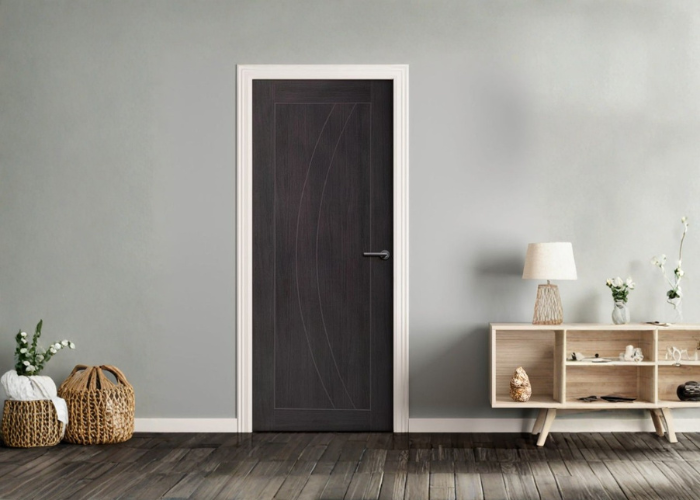
What They Are: Semi-solid doors feature a solid wood frame (rails and stiles) with a core made from engineered materials or lower-grade wood blocks. The outer surfaces are typically covered with wood veneer or solid wood panels.
Construction: The door’s perimeter is solid wood, while the center core uses materials like particleboard, MDF (Medium Density Fiberboard), or wood blocks. This construction is then covered with decorative veneer or solid wood facing.
Advantages:
- Moderate pricing: More affordable than solid doors
- Good durability: Stronger than hollow-core engineered doors
- Decent soundproofing: Better noise reduction than fully engineered options
- Less warping: More stable than solid wood in humid conditions
- Lighter weight: Easier to install than solid doors
- Attractive appearance: Can mimic the look of solid wood
Disadvantages:
- Limited refinishing: Cannot be sanded as many times as solid wood
- Not as durable: Won’t last as long as genuine solid doors
- Moderate sound insulation: Not as effective as solid doors
- Veneer damage risk: Surface veneer can chip or peel if damaged
Best For: Bedroom doors, bathroom doors, closets, rental properties, and homes seeking a balance between quality and budget. Semi-solid doors work well for most interior applications where extreme durability isn’t essential.
3. Engineered Doors: Cost-Effective Solutions
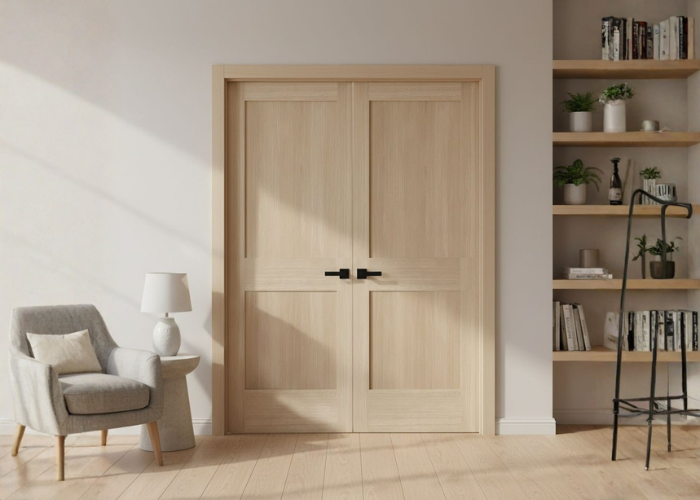
What They Are: Engineered doors (also called hollow-core or flush doors) feature a lightweight frame made from softwood or composite materials with a hollow or honeycomb cardboard core. The exterior is covered with thin veneer, laminate, or PVC.
Construction: The door consists of a basic wooden frame around the perimeter, filled with a cardboard honeycomb or rigid foam core for structure. The surface is finished with thin wood veneer, laminate, vinyl, or PVC sheets.
Advantages:
- Budget-friendly: Most affordable door option
- Lightweight: Easy to handle and install
- Variety of finishes: Available in numerous colors and patterns
- Low maintenance: Resistant to warping and moisture
- Consistent appearance: Uniform surface without natural wood variations
- Quick installation: Simple to hang and adjust
Disadvantages:
- Poor soundproofing: Hollow core allows sound to pass through easily
- Lower durability: Can be damaged by impact
- Limited lifespan: Won’t last as long as solid or semi-solid options
- Cannot be refinished: Surface damage is often permanent
- Less secure: Easier to breach than solid options
- Lightweight feel: Lacks the substantial feel of quality doors
Best For: Closet doors, pantries, utility rooms, temporary spaces, builder-grade homes, and areas where sound insulation and durability are less critical. Engineered doors excel in low-traffic areas where budget is the primary consideration.
Popular Door Design Styles for Modern Interiors
Now that you understand door construction types, let’s explore nine stunning design styles that can transform your interior spaces. Each design offers unique aesthetic appeal and functional benefits.
1. Aqua Door Design
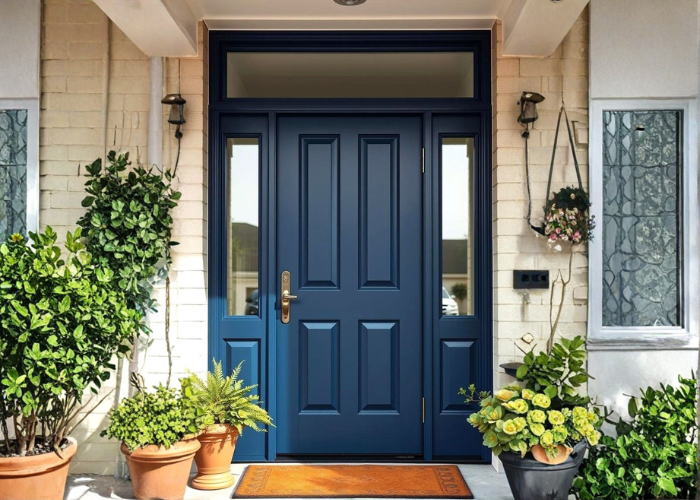
The Aqua design features flowing, wave-like patterns with horizontal or curved lines that evoke the tranquility of water. These doors typically showcase smooth, contemporary grooves creating a sense of movement and fluidity.
Ideal For: Modern bathrooms, spa-inspired bedrooms, coastal-themed homes, and minimalist interiors seeking a calming aesthetic.
2. Louver Door Design
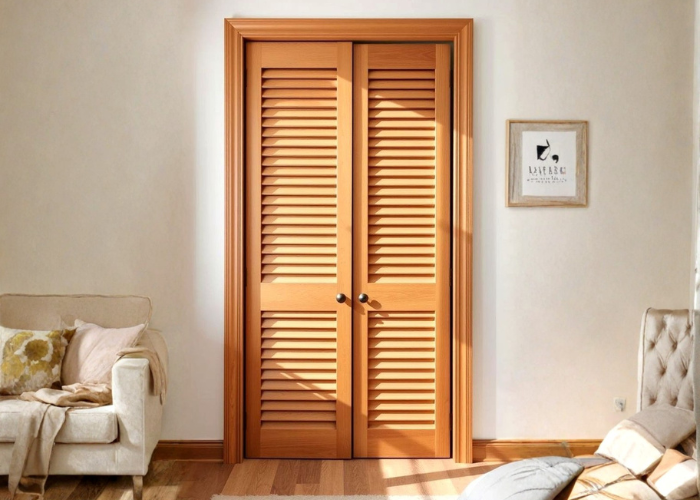
Louver doors feature horizontal slats (louvers) that allow air circulation while maintaining privacy. The slats can be fixed or adjustable, creating a distinctive linear pattern that adds texture and visual interest.
Ideal For: Closets, laundry rooms, utility spaces, tropical-style homes, and areas requiring ventilation without sacrificing privacy. Perfect for wardrobes to prevent musty odors.
3. Strip Door Design
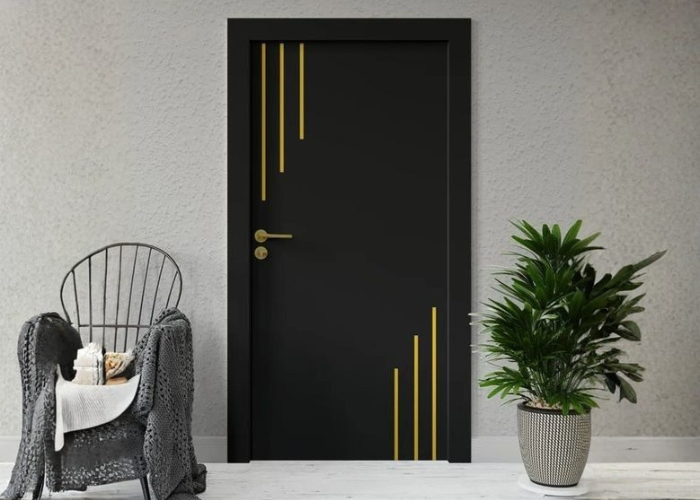
Strip doors showcase clean, vertical or horizontal lines creating a sleek, contemporary look. The strips can be uniform or varied in width, offering a modern, minimalist aesthetic with strong geometric appeal.
Ideal For: Modern living rooms, contemporary offices, urban apartments, and spaces embracing industrial or Scandinavian design styles.
4. Regency Door Design
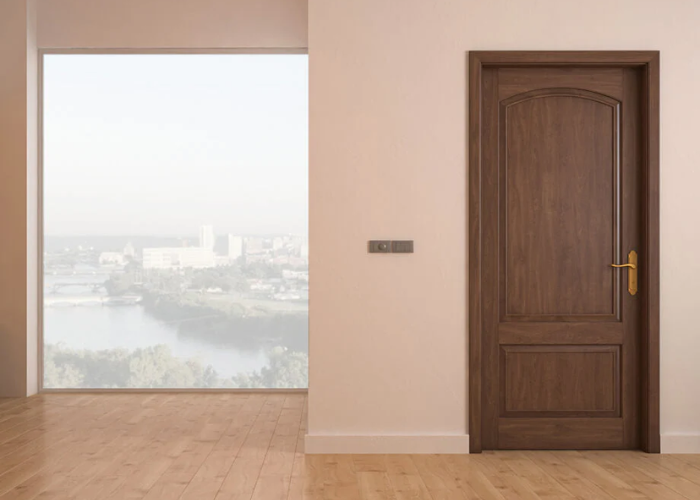
Inspired by classical European architecture, Regency doors feature elegant panel configurations with traditional raised or recessed panels. They exude sophistication and timeless charm with ornate detailing.
Ideal For: Traditional homes, colonial-style interiors, formal dining rooms, libraries, and spaces seeking classic elegance and heritage appeal.
5. Quartz Door Design
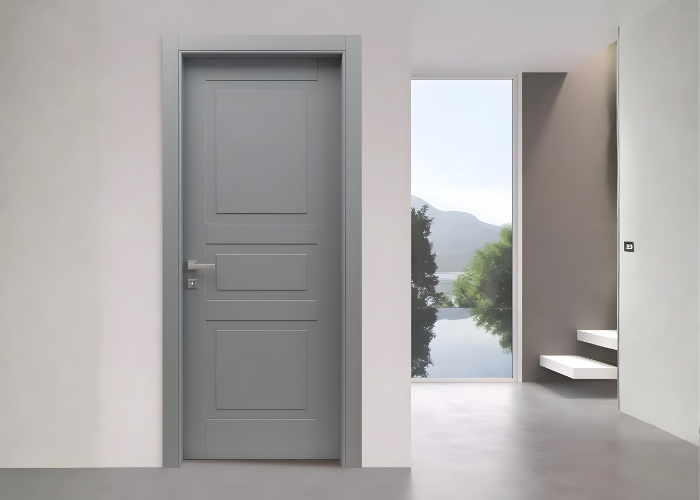
Quartz design doors incorporate geometric patterns, angular lines, or crystalline-inspired motifs. They create striking visual impact through modern, abstract patterns that catch light beautifully.
Ideal For: Contemporary bedrooms, luxury apartments, modern offices, and homes with artistic or avant-garde interior themes.
6. Logica Door Design
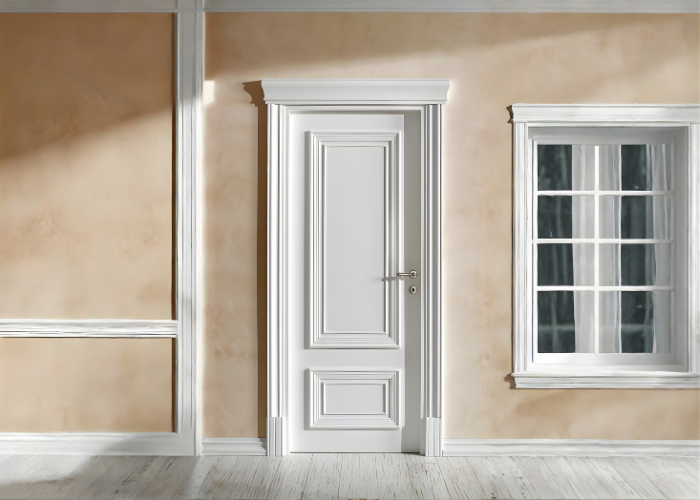
The Logica design emphasizes clean geometry and logical, symmetrical patterns. It features balanced proportions with rectangular panels or linear elements arranged in harmonious configurations.
Ideal For: Minimalist homes, tech-forward spaces, modern offices, and interiors prioritizing order, simplicity, and functional beauty.
7. Barn Door Design
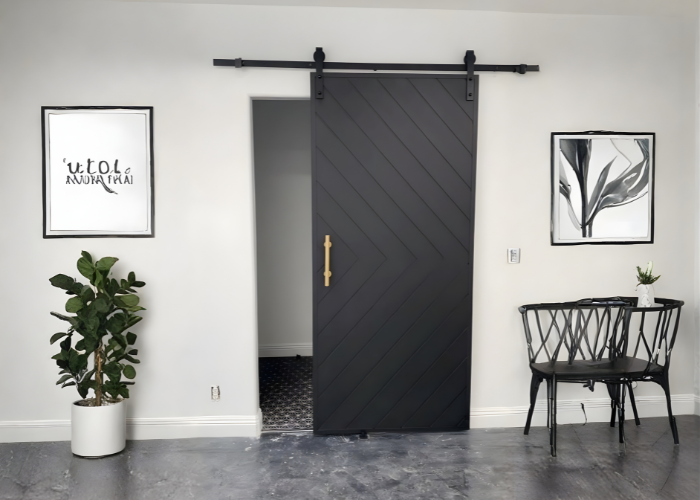
Barn doors slide along exposed tracks rather than swinging open, featuring rustic, farmhouse-inspired aesthetics. They can be crafted from reclaimed wood, modern materials, or feature decorative hardware.
Advantages:
- Space-saving solution for tight areas
- Adds rustic or industrial character
- Versatile styling from farmhouse to contemporary
- Creates visual focal points
Ideal For: Loft apartments, farmhouse-style homes, small spaces, master bathrooms, closets, and adding statement pieces to modern interiors.
8. Tria Door Design
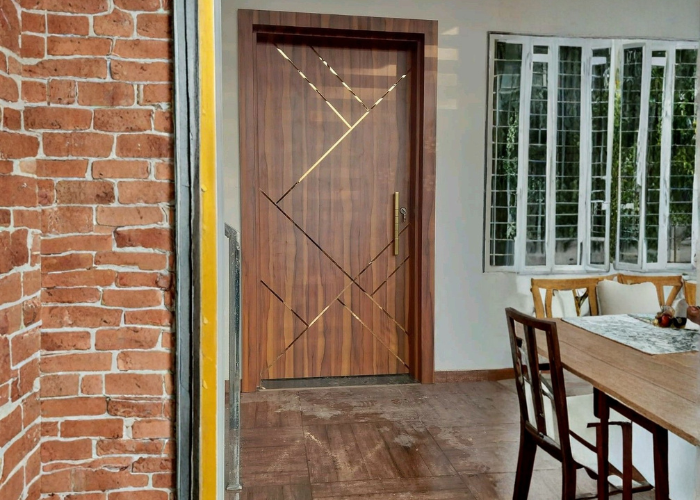
Tria doors feature triangular elements or three-panel configurations creating dynamic, geometric interest. The design plays with angles and shapes for a modern, architectural look.
Ideal For: Contemporary homes, creative studios, modern children’s rooms, and spaces wanting unique, conversation-starting design elements.
9. Linia Door Design
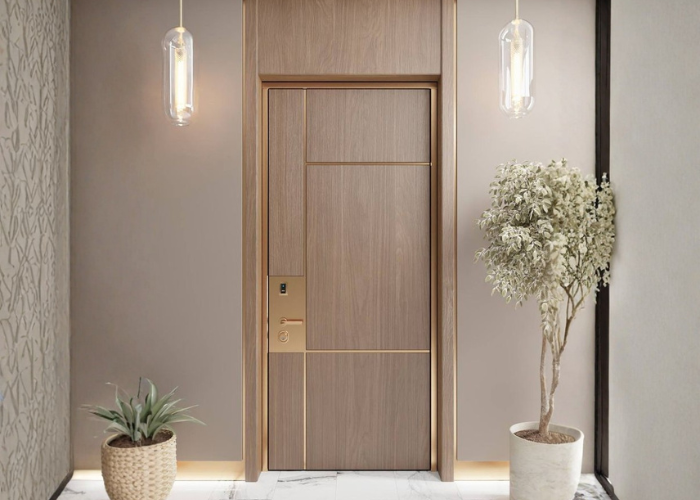
Linia designs celebrate linear simplicity with horizontal or vertical lines creating clean, uninterrupted flow. These doors embody minimalism with subtle grooves or raised lines adding dimension without complexity.
Ideal For: Scandinavian interiors, Japanese-inspired minimalism, modern condos, and any space seeking understated elegance and visual calm.
Choosing the Right Door for Your Space
When selecting doors for your home, consider these key factors:
Construction Type Decision:
- Budget: Engineered doors for economy, semi-solid for mid-range, solid for premium
- Sound control: Solid doors for bedrooms and offices, engineered for closets
- Durability needs: Solid or semi-solid for high-traffic areas
- Climate: Semi-solid or engineered for humid areas prone to warping
Design Style Selection:
- Interior theme: Match door design to your overall aesthetic (traditional, modern, rustic)
- Space function: Louver for ventilation, barn for space-saving, Regency for formal areas
- Personal taste: Choose designs that resonate with your style preferences
- Consistency: Maintain design harmony throughout connected spaces
Practical Considerations:
- Door size and swing direction: Ensure proper clearance and traffic flow
- Hardware compatibility: Select hinges and handles matching door weight
- Finish options: Consider stains, paints, or natural wood finishes
- Maintenance: Factor in long-term care requirements
Transform Your Home with the Perfect Doors
Doors significantly impact your home’s functionality, aesthetics, and value. Whether you choose the premium quality of solid doors, the balanced approach of semi-solid construction, or the affordability of engineered options, pairing the right construction with complementary design styles creates cohesive, beautiful interiors.
At Dilawar Interiors, we specialize in helping homeowners select and install the perfect doors for every space. From classic Regency elegance to modern Linia minimalism, from space-saving barn doors to ventilated louver designs, we bring expertise and quality craftsmanship to every project.
Ready to upgrade your interior doors? Contact Dilawar Interiors today to explore our extensive door collection and discover how the right choices can transform your living spaces.