Think about the last time a building genuinely stopped you in your tracks.
best Architects in Lahore: Maybe it was a home on a DHA street with a façade so well-composed it felt like a piece of art. Maybe it was a commercial building in Gulberg whose glass and steel exterior communicated professionalism before you ever read the name on the sign. Maybe it was a small office in Johar Town where the elevation design was so clean and considered it made the business inside feel instantly credible.
That reaction — that moment of genuine visual impact — doesn’t happen by accident.
It happens because a skilled architect made hundreds of deliberate decisions. The proportion of windows to wall. The choice of materials and their relationship to each other. The way natural light plays across the facade at different times of day. The way the building sits in its street context. The way the design communicates something specific about the people and the purpose inside.
That is what great architectural elevation design does. And that is exactly what the architectural team at Dilaawar Interiors delivers for residential and commercial clients across Lahore and Pakistan.
We are not just interior designers. We are a complete design and build firm — offering architectural services, elevation design, interior design, and construction under one roof. Whether you’re building a new home, designing a commercial office facade, planning a residential compound, or renovating an existing building’s exterior — our architects in Lahore bring the expertise, the creativity, and the local knowledge to make your vision a stunning, built reality.
In this complete guide, we’re breaking down everything you need to know about modern elevation design in Pakistan — what it involves, what the key design elements are, what it costs in PKR, and how Dilaawar Interiors approaches every architectural project we take on.
best Architects in Lahore: What is Building Elevation Design and Why Does It Matter in Pakistan?
Before we get into design elements and costs, let’s establish what elevation design actually means — because it’s a term that gets used loosely and is frequently misunderstood by clients beginning their first architectural project.
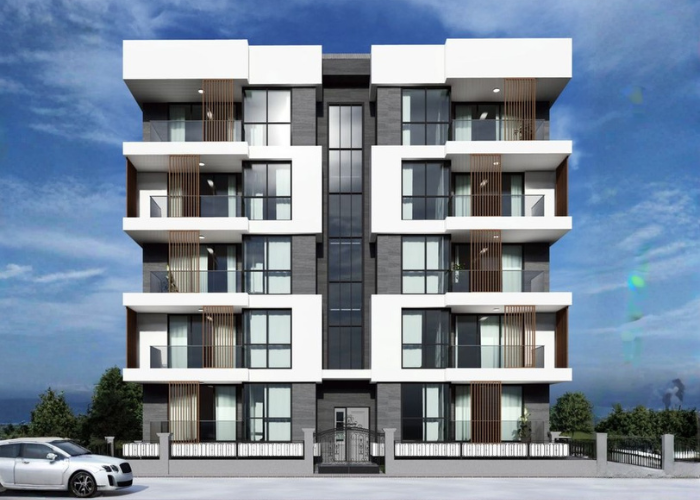
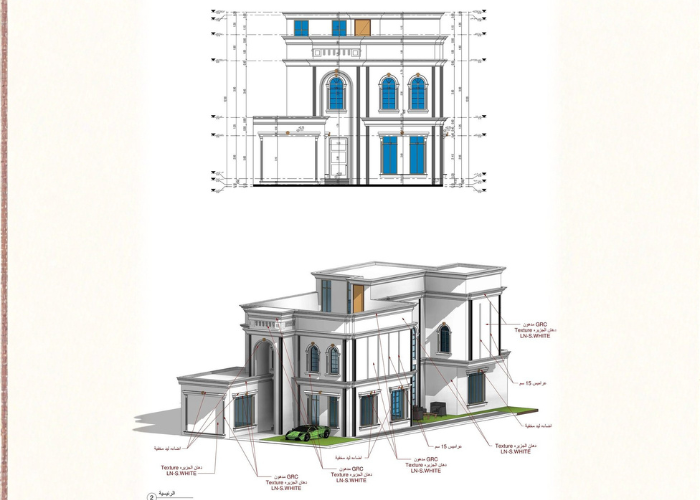
A building elevation is a technical architectural drawing that shows the external face of a building — its façade — as seen from the front, sides, and rear. Elevation design is the process of designing what that exterior face will look like — the materials, the openings, the proportions, the surface treatments, the architectural features, and how all of these elements work together to create a coherent, intentional exterior appearance.
In Pakistan specifically, elevation design carries enormous weight — both aesthetically and practically.
Why Elevation Design is Critical for Pakistani Homes and Businesses
In Lahore’s residential neighborhoods — from DHA and Bahria Town to Gulberg and Model Town — the elevation of your home is visible to your neighbors, your community, and every visitor before they ever enter. In a culture where a home reflects family identity and social standing, a poorly designed or cheaply executed elevation is something that affects how your property is perceived for decades.
For businesses, the stakes are even higher. A commercial building’s elevation is a 24-hour advertisement for the business inside. Before a potential client reads your name, before they decide whether to walk in, they have already made a subconscious judgment based on what the building looks like from outside. In Lahore’s competitive commercial environment — where businesses in the same sector cluster on the same streets — your elevation design is often the deciding factor between a potential customer choosing you or the business next door.
The Pakistani architectural Landscape in 2026
Lahore’s architectural landscape is undergoing a dramatic and exciting transformation. The traditional red brick and painted plaster facades that dominated residential construction for decades are giving way to a new architectural vocabulary — glass curtain walls, exposed concrete, textured cladding, composite aluminium panels, and integrated green features. Commercial areas like MM Alam Road, Gulberg Galleria, and DHA’s commercial zones are showcasing architectural ambition that was rarely seen in Lahore just 10 years ago.
At the same time, Pakistani clients are becoming significantly more sophisticated in their architectural expectations. They’re traveling more, consuming global design content online, and arriving at architectural consultations with genuine references, informed preferences, and high standards. The days of “just make it look nice” are over. Clients want specific design languages executed with genuine skill — and they can tell the difference.
This is the environment in which Dilaawar Interiors architectural team operates — and thrives.
💬 Planning a new build or renovation in Lahore and want to see what’s possible for your elevation design? Our architects will create a 3D elevation visualization of your project so you can see exactly how it will look before construction begins.
Key Elements of Modern Elevation Design — What Our Architects in Lahore Focus On
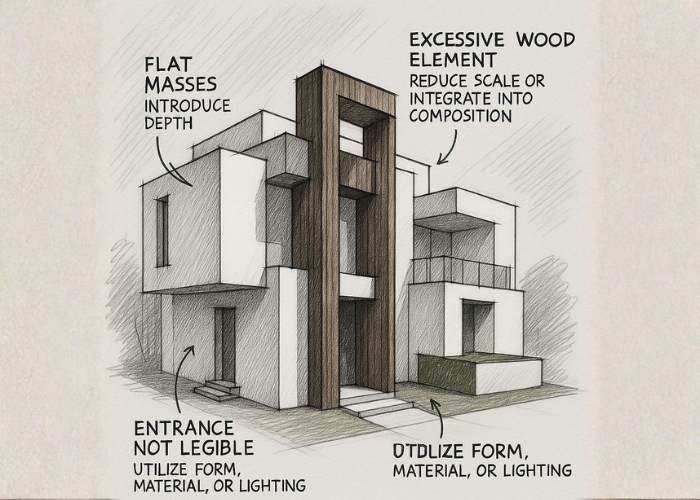
Every great building elevation is the result of mastering and balancing a set of fundamental design elements. At Dilaawar Interiors , our architectural team approaches every project by working through each of these elements systematically — before a single line is drawn.
Element 1: Site Analysis and Context Planning
The first and most critical step in any elevation design — and the step that amateur designers and inexperienced contractors skip most often — is thorough site analysis.
Before we design anything, our architects study the site. We look at the plot’s orientation relative to the sun — which direction receives morning light, where harsh afternoon western sun falls, how shadows from neighboring buildings affect the site throughout the day. We assess the surrounding streetscape — the scale of neighboring buildings, the dominant materials and colors in the neighborhood, and the visual rhythm of the street.
We also assess local zoning regulations and society approval requirements. In Lahore, every major residential society — DHA, Bahria Town, Wapda Town, Lake City, and others — has its own architectural guidelines covering setbacks, building heights, facade materials, and permitted design elements. Designing a beautiful elevation that violates society regulations is a complete waste of time and money. Our architects know these regulations intimately and design within them from the very first sketch.
Why this matters for you: A site-informed elevation design performs better — it maximizes natural light for the specific plot orientation, relates appropriately to the neighborhood context, and sails through society approval processes without costly revisions.
Element 2: Concept Development and Design Brief
Once the site analysis is complete, our architectural team develops a design concept — a clear design direction that establishes the building’s architectural identity before detailed design begins.
This concept is developed in close dialogue with the client. We present multiple concept directions — with precedent images, material palettes, and sketch elevations — and work with the client to identify which direction aligns with their vision, their budget, and the building’s purpose. This collaborative concept stage is where the most important design decisions are made, and it’s a stage that should never be rushed.
A clear design concept means every subsequent design decision has a reference point. When we’re choosing between two window configurations or two cladding materials, the concept tells us which is right. Without a clear concept, design decisions become arbitrary — and arbitrary design produces elevations that look confused and unresolved.
Design concepts we regularly develop for Pakistani clients include:
- Contemporary minimalist — clean lines, neutral materials, strong geometric composition
- Modern Pakistani fusion — contemporary structure with traditional jaali, arch, or geometric pattern elements
- Industrial modern — exposed concrete, steel, and glass with raw material honesty
- Warm contemporary — natural stone, timber cladding, and warm metal accents
- Classic modern — symmetrical composition with refined traditional detailing in a modern material palette
Element 3: Proportion and Composition
Proportion is the element of elevation design that separates genuinely beautiful buildings from ones that feel slightly “off” even when you can’t immediately identify why.
Proportion refers to the size relationships between elements on a facade — the height-to-width ratio of windows, the relationship between solid wall and glazed opening, the visual weight of a cornice versus the wall height below it, the scale of an entrance canopy relative to the building height. When these proportions are right, a building feels harmonious and resolved. When they’re wrong, something always feels uncomfortable — even to people who don’t have an architectural vocabulary to describe what they’re seeing.
Our architects apply established proportional systems — including classical proportion ratios and modern compositional principles — to every elevation we design. This is the discipline that produces elevations that feel genuinely beautiful rather than merely decorative.
Element 4: Material Selection and Texture
Material choices define the character of a building elevation more powerfully than almost any other single design decision. The difference between a building clad in fair-faced brick versus textured paint versus glass curtain wall versus natural stone is not just a surface finish difference — it is a fundamental character difference.
For Pakistani projects, material selection must also account for climate performance, maintenance requirements, local availability, and cost realities. Our architects specify materials that achieve the desired aesthetic while performing well in Lahore and Pakistan’s broader climate conditions — surviving the 45°C summer heat, the monsoon season’s driving rain, and the dust that accumulates on every surface year-round.
Materials our architectural team commonly specifies for Pakistani elevations include:
Aluminium composite cladding panels are among the most popular choices for modern commercial elevations in Lahore right now. They come in virtually any color and finish, are lightweight, extremely durable, and require minimal maintenance. They give commercial buildings that clean, corporate, international look at a cost that works for Pakistani project budgets.
Exposed brick — both traditional red Pakistani brick and the increasingly popular lighter grey and cream brick — creates warmth and texture while being completely climate-appropriate and locally sourced. Modern elevation designs using exposed brick with careful mortar detailing and complementary metal or glass elements are among the most striking in Lahore’s current residential landscape.
Glass — whether as large fixed windows, frameless curtain wall systems, or double-glazed units in powder-coated aluminium frames — is the signature material of contemporary commercial architecture. For Pakistani projects, glass selection requires careful attention to solar heat gain — specifying low-E glass or external shading elements to prevent the glazed spaces inside from becoming uninhabitable in summer.
Natural stone cladding — particularly white marble, light sandstone, and textured granite — adds luxury and permanence to residential elevations. Pakistan has excellent natural stone resources, and locally sourced stone adds both design quality and sustainability credentials to a project.
Textured paint and external plaster finishes remain the most accessible and widely used facade treatment for residential buildings across Pakistan. When designed with careful attention to color, texture, and the architectural elements they’re applied to, painted plaster elevations can be genuinely beautiful — especially when combined with stone or metal accents at key points.
Element 5: Window and Opening Design
Windows are the eyes of a building. Their size, proportion, position, and framing define more of the elevation’s character than almost any other individual element.
In modern elevation design, the relationship between the glazed openings and the solid wall is a primary compositional tool. Large expanses of glass create transparency, openness, and a contemporary feeling. Smaller, carefully placed windows in thick walls create a sense of solidity, privacy, and permanence. The most interesting elevations typically play with this contrast — using both conditions in different zones of the facade to create visual rhythm and variety.
For Pakistani residential projects, window design must also balance the desire for natural light and views against the privacy requirements of Pakistani family life — particularly for ground-floor rooms facing the street. Our architects navigate this balance carefully — using screening elements, deep reveals, high-placed windows, or internal courtyard configurations to bring light in without compromising privacy.
Element 6: Natural Light Integration
The importance of natural light in building design cannot be overstated — and this is an area where architectural skill makes an enormous difference to the quality of life inside a building.
A well-designed elevation maximizes useful natural daylight — bringing bright, diffused light deep into interior spaces — while controlling direct harsh sunlight that creates glare and heat gain. Achieving this requires understanding exactly how the sun moves across the specific site throughout the day and across the seasons, and designing the facade’s openings, overhangs, shading elements, and orientation accordingly.
Studies consistently demonstrate that access to natural light improves mood, productivity, and wellbeing for both residential occupants and commercial employees. In Pakistan, where electricity costs are high and load shedding remains a reality, well-designed natural daylighting also has a very direct economic benefit — reducing dependence on artificial lighting during daylight hours.
Our architects design every elevation with a detailed sun path analysis for the specific site and orientation — ensuring that the finished building performs as beautifully in daily life as it looks in photographs.
Element 7: Sustainable and Energy-Efficient Design Features
Sustainable design is no longer a premium add-on for Pakistani architectural projects — it is rapidly becoming a financial necessity given Pakistan’s energy costs, climate challenges, and the growing awareness among clients of long-term operating costs.
At Dilaawar Interiors, our architectural team integrates sustainability thinking into every elevation design from the very first concept stage — not as an afterthought.
Sustainable elevation features we regularly incorporate:
External shading devices — fixed horizontal or vertical fins, louvres, and overhangs — reduce solar heat gain on glazed surfaces without compromising natural light. In Pakistan’s climate, a well-designed shading strategy on a glass-heavy commercial elevation can reduce cooling energy consumption by 20 to 35 percent — a significant operating cost saving over the building’s life.
Insulated wall construction — using cavity walls, insulated cladding systems, or internal insulation behind external finishes — dramatically reduces heat transfer through the building envelope. This keeps interiors cooler in summer with less AC energy, directly reducing electricity bills.
Green roofs and planted wall elements, where structurally viable, reduce heat island effect and improve building thermal performance while adding significant visual interest to the elevation.
High-performance glazing — low-E glass, double glazing, or solar control films — maintains the visual openness that modern architectural aesthetics demand while significantly reducing unwanted heat gain.
Solar panel integration is increasingly being incorporated into commercial building facades and rooftops in Pakistan, particularly as solar panel costs have dropped dramatically and net metering provisions have made them financially viable.
💬 Want a sustainable elevation design that saves you money on energy bills for decades? Our architects design for long-term performance — not just first impressions.
📞 Book Your Free Architecture Consultation → dilaawarinteriors.com/contact
Residential Elevation Design in Lahore — Styles and Trends in 2026
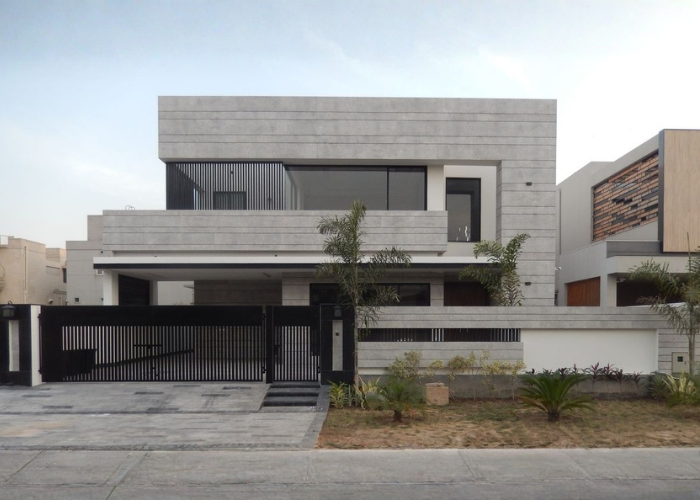
Lahore’s residential aarchitectural landscape offers a fascinating range of design directions — from deeply traditional to boldly contemporary. Here’s what our architects are seeing dominate the most successful residential projects in 2026.
Style 1: Contemporary Minimalist
Clean lines, neutral material palettes, strong horizontal emphasis, and carefully controlled window compositions define this look. Elevations in this style typically use a restrained palette of two or three materials — often exposed concrete or textured plaster in a warm grey or off-white, combined with glass and a single metal accent material in matte black or brushed steel.
This style works exceptionally well for Lahore’s modern residential areas — DHA Phase 8, 9, Bahria Town’s newer phases, and Lake City — where contemporary architectural language is increasingly becoming the standard expectation.
Typical cost premium over standard construction: 15 to 25 percent for materials and detailing
Style 2: Modern Pakistani Fusion
This is perhaps the most exciting and culturally resonant design direction emerging in Pakistani residential architecture right now. It takes the proportional clarity and material honesty of contemporary design and weaves in elements drawn from Pakistan’s rich architectural heritage — jaali screen patterns, geometric tile inlays, arched openings with refined modern proportions, and traditional courtyard planning principles.
The result is architecture that feels genuinely Pakistani without being nostalgic or backward-looking. It belongs to this moment, this country, and this culture — while being confidently contemporary.
Our architectural team has a strong passion for this design direction, and several of our residential projects in DHA and Gulberg have explored this fusion approach with extraordinary results.
Typical cost premium: 20 to 35 percent for the custom elements and skilled craftwork required
Style 3: Warm Contemporary
A reaction to the coldness that purely minimalist modern architecture can sometimes produce, the warm contemporary style uses natural and warm materials — timber cladding or timber-look composite panels, warm beige and terracotta stone tones, soft bronze and brass metal accents, and generous planting integrated into the facade — to create modern buildings that feel welcoming and human rather than stark and institutional.
This style is particularly appropriate for family homes where the warmth and approachability of the exterior should communicate the life and warmth inside.
Typical cost: Similar to standard contemporary construction with premium material selections
Style 4: Classic Modern
Symmetrical compositions, refined traditional detailing executed in modern materials, and an emphasis on permanence and grandeur — this is the direction that appeals to Pakistani clients who want an elevation that communicates established, enduring status rather than fashionable contemporaneity.
Classic modern elevations use modern construction methods and materials but apply classical compositional principles — bilateral symmetry, tripartite organization of the facade, formal entrance treatment, and decorative elements at cornice and window levels that reference traditional architecture without copying it.
This style is extremely popular for larger residential properties on 1 kanal and 2 kanal plots in DHA’s earlier phases and Gulberg’s residential areas.
Typical cost: Higher, due to the decorative detailing and premium materials this style requires
Commercial Elevation Design in Lahore — What Businesses Need to Know
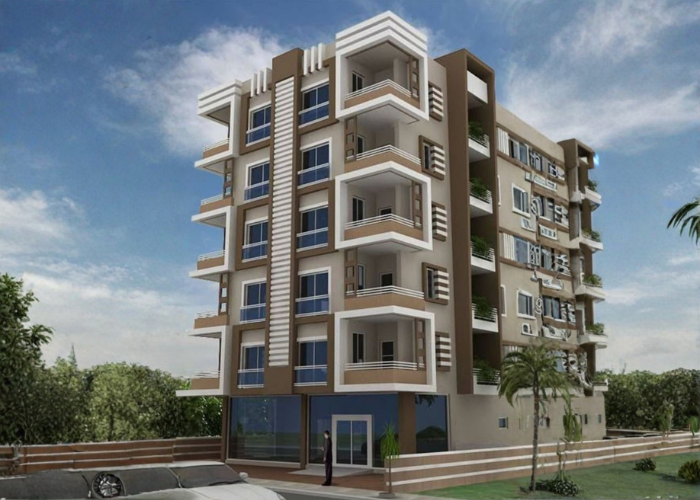
Commercial elevation design operates under different rules and different pressures than residential architecture. The primary purpose of a commercial building’s facade is not just to look beautiful — it is to communicate something specific about the business inside and to attract and invite the people that business wants to serve.
Office Building Elevation Design
A corporate office elevation needs to communicate professionalism, capability, and credibility — before a single visitor enters the building. In Lahore’s competitive business environment, the physical presentation of your office building is a direct reflection on the quality and seriousness of your business.
Modern office elevation design in Pakistan is moving decisively toward glass and aluminium composite panel systems — creating facades that are visually clean, highly professional, and maintenance-friendly. The integration of the company brand’s color palette into the cladding specification is increasingly common — creating buildings that are immediately recognizable as belonging to a specific brand.
Key considerations for office elevation design in Pakistan:
- Street-facing visibility and signage integration
- Entrance design — conveying accessibility and professionalism
- Glazing strategy — balancing transparency with solar control
- Parking and access — integrated into the facade composition
- Society and authority approval requirements for the specific location
Cost Range: PKR 1,800 – 4,500 per sq ft for facade construction depending on material system
Retail and Commercial Shop Elevation Design
Retail elevation design is arguably the most commercially critical architectural work— because for a retail business, the facade is literally a sales tool. It needs to attract attention, communicate what the business offers, create desire to enter, and remain distinctive in a competitive commercial streetscape.
In Lahore’s commercial areas — MM Alam Road, Fortress Stadium, Liberty Market, Packages Mall precinct, and DHA’s commercial zones — the quality of retail elevation design varies enormously. Businesses with well-designed, distinctive facades consistently outperform neighbors with generic or neglected exteriors.
What makes retail elevations work in Pakistan:
- Distinctive identity — standing out in a dense commercial streetscape
- Legible signage integration — part of the design, not an afterthought
- Appropriate lighting — facade lighting dramatically improves evening presence
- Shopfront design — the transition from public street to retail interior
- Material durability — high-traffic areas need robust, easy-to-maintain surfaces
Cost Range: PKR 2,000 – 6,000 per sq ft for facade construction and fit-out depending on specification
Restaurant and Café Elevation Design
Restaurant and café exterior design is about creating desire — making the passerby hungry, curious, and compelled to enter before they’ve seen the menu or experienced the interior. In Lahore’s vibrant food and café culture, a compelling exterior has enormous commercial value.
The most successful restaurant elevations in Lahore right now share common characteristics — they create visual intrigue through material contrast and lighting, they offer glimpses of the interior atmosphere from the street, and they have a strong design identity that photographs well for social media — which in Lahore’s food scene is a genuine commercial consideration.
Cost Range: PKR 2,500 – 7,000 per sq ft for facade and shopfront design and construction
💬 Building a new commercial space in Lahore and need an elevation that works as hard as your business? Our commercial architecture team designs facades that attract customers and communicate brand identity from the street. 📲 WhatsApp Us Now for a Free Commercial Architecture Consultation
The Dilaawar Interiors Architectural Design Process — From Concept to Construction
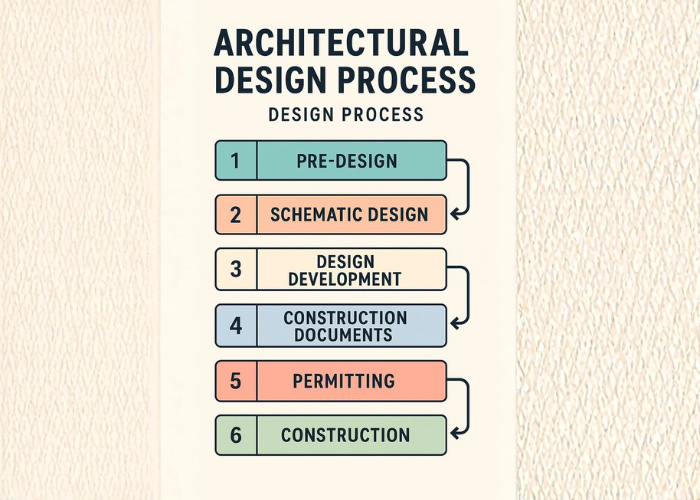
Our architectural design process is structured to give clients complete clarity and confidence at every stage — from the first conversation to the moment construction is complete.
Stage 1: Initial Consultation and Project Brief
Every architectural project at Dilaawar Interiors begins with a free, no-obligation consultation. This is where we understand your project — the plot, the building type, the intended use, your design preferences and references, your budget, and your timeline.
We ask detailed questions at this stage because the quality of the design brief directly determines the quality of the design. Vague briefs produce generic designs. Detailed, specific briefs produce architecture that genuinely fits the client’s vision and the site’s potential.
Duration: 60 to 90 minutes Cost: Free, no obligation
Stage 2: Site Visit and Analysis
Our architectural team visits the site to take measurements, assess orientation, document existing conditions and context, photograph the site and surrounding streetscape, and identify any site-specific constraints or opportunities that should inform the design.
For renovation projects, this stage also includes assessing the existing building’s structural condition, identifying elements worth retaining or restoring, and documenting any issues that need to be resolved.
Duration: 2 to 3 hours on site Outcome: Detailed site analysis document and base survey drawings
Stage 3: Concept Design and 3D Elevation Visualization
Based on the project brief and site analysis, our architectural team develops two to three distinct concept design directions — each with a clear design rationale, material palette, and initial 3D elevation visualization so you can see how each direction would look on your specific site.
This is the most important creative stage of the process — and also the most collaborative. We present the concepts, explain the thinking behind each, and work with you to identify which direction to develop further. Refinements are made based on your feedback until the concept feels completely right.
Duration: 10 to 15 working days What you receive: 3D elevation renders for 2 to 3 design concepts, material palette boards, and design rationale presentation
Stage 4: Design Development and Detailed Drawings
Once the concept is approved, we develop the design into full architectural drawings — detailed enough for society approval submission, contractor tendering, and construction. This includes dimensioned elevation drawings, section drawings, floor plans, material and finish specifications, and where required, structural and MEP coordination drawings.
Duration: 15 to 25 working days depending on project complexity What you receive: Complete architectural drawing set, society submission drawings, material specifications, and detailed cost estimate
Stage 5: Society Approvals and Permissions
In Lahore, most residential and commercial construction requires approval from the relevant society administration — DHA, Bahria Town, LDA, or others. Each has its own submission requirements, design guidelines, and approval timelines.
Dilaawar Interiors handles the complete approval submission process — preparing all required documentation, submitting to the relevant authority, responding to queries, and obtaining final approval. Our familiarity with Lahore’s various approval processes significantly reduces the time and frustration of this stage.
Duration: 2 to 8 weeks depending on authority and project complexity What you receive: Approved architectural drawings and all relevant permissions for construction
Stage 6: Construction Supervision and Site Oversight
Dilaawar Interiors can provide full construction supervision for your project — with our architectural team making regular site visits, reviewing contractor work against the approved drawings, and ensuring that the built result faithfully realizes the designed intent.
This stage is where many architectural projects go wrong when designers are not involved in construction oversight. Contractors make well-intentioned but design-compromising shortcuts. Details that look straightforward on drawings turn out to require careful site judgment to execute correctly. Having the design team involved through construction is the difference between a building that looks like the design and one that vaguely resembles it.
Duration: Throughout construction period What you receive: Regular site reports, design clarification as needed, and quality sign-off at completion
Architectural Services Cost Guide — Lahore 2026
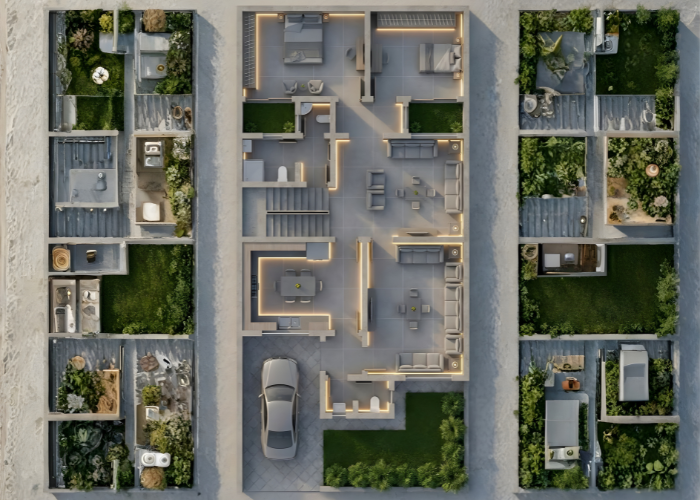
Understanding what architectural services cost in Pakistan is difficult because pricing is rarely transparent in this industry. Here’s our honest guide to what you should expect to pay for quality architectural work in Lahore.
Architectural Design Fees
| Service | Typical Fee Range |
| Residential elevation design (3D + drawings) | PKR 50,000 – 1,50,000 |
| Complete residential architectural drawings | PKR 80,000 – 2,50,000 |
| Commercial elevation design | PKR 80,000 – 2,50,000 |
| Complete commercial architectural package | PKR 1,50,000 – 5,00,000 |
| Society approval submission service | PKR 25,000 – 75,000 |
| Construction supervision (monthly) | PKR 30,000 – 1,00,000 |
| 3D visualization only | PKR 20,000 – 60,000 per view |
Fees vary based on project size, complexity, and scope of services required.
Facade Construction Cost Guide
| Facade Material | Construction Cost Per Sq Ft |
| Textured paint / plaster finish | PKR 150 – 400 |
| Exposed brick (standard) | PKR 350 – 700 |
| Natural stone cladding | PKR 600 – 1,500 |
| Aluminium composite panels (ACP) | PKR 700 – 1,500 |
| Glass curtain wall system | PKR 1,500 – 4,000 |
| Custom feature elements (jaali, metal screens) | PKR 800 – 3,000 |
Construction costs are for facade work only and do not include structural work, internal finishes, or MEP systems.
Common Elevation Design Mistakes in Pakistani Construction — And How to Avoid Them
Mistake 1: Starting Construction Without Finalized Elevation Drawings
The single most expensive mistake in Pakistani construction is beginning to build without complete, detailed, approved architectural drawings. Decisions that should have been made on paper get made on site — under time pressure, without design expertise, and with irreversible consequences. The result is buildings that look like a series of improvised decisions — because that’s exactly what they are.
Always finalize and approve complete architectural drawings before any construction begins. The cost of proper architectural drawings is a tiny fraction of the construction cost — and the cost of fixing design mistakes during or after construction is enormous.
Mistake 2: Choosing Materials Based on Initial Cost Rather Than Lifecycle Value
In Pakistan’s construction market, there is constant pressure to specify cheaper materials to reduce upfront costs. The problem is that most cheap facade materials have dramatically higher maintenance costs and much shorter lifespans than their slightly more expensive alternatives. A facade material that costs 30 percent less to install but needs repainting every 2 years instead of every 7 years is not cheaper — it’s significantly more expensive over the building’s life.
Our architects always present material specifications with lifecycle cost analysis — showing clients not just what a material costs to install but what it will cost over 10 and 20 years of ownership.
Mistake 3: Ignoring Solar Orientation in Facade Design
Pakistan’s climate is one of the harshest for buildings that ignore solar orientation. A west-facing glass facade in Lahore, designed without external shading, will create interior temperatures that are impossible to cool with any practical air conditioning system during June to September. We see this mistake repeatedly in Lahore’s commercial buildings — beautiful-looking facades that make the interior spaces behind them genuinely uncomfortable and very expensive to condition.
Always ensure your architectural team conducts a sun path analysis for your specific site orientation before finalizing the glazing and shading design.
Mistake 4: Designing Without Society Regulation Knowledge
Every major residential society in Lahore has architectural guidelines — covering everything from plot coverage ratios and building heights to permitted facade materials and setback requirements. Designing a beautiful elevation that violates these guidelines means either paying to redesign everything before approval, or building without approval and facing enforcement action later.
Our architects know Lahore’s major society regulations in detail — DHA, Bahria Town, Wapda Town, Lake City, and LDA regulations — and design within them from the very first sketch.
Mistake 5: Underestimating the Importance of Entrance Design
The entrance to a building — whether residential or commercial — is the moment where the facade becomes architecture. It is the transition from public to private, from street to interior, from outsider to guest. In Pakistani residential architecture, the entrance is the element guests experience most intimately and remember most vividly.
A poorly designed entrance — undersized, poorly detailed, or out of proportion with the rest of the elevation — undermines the entire facade design no matter how well the rest is executed. Our architects give entrance design dedicated, detailed attention in every project.
Mistake 6: Not Integrating Lighting Into the Facade Design
Facade lighting — when designed as part of the architecture rather than installed as an afterthought — can transform a building’s appearance at night into something that is as compelling as its daytime presence. In Lahore’s warm, social evenings, a beautifully lit residential or commercial facade has enormous value.
When lighting is an afterthought, fixtures are surface-mounted in arbitrary positions, cables are exposed in conduit, and the effect is cluttered and amateurish. Integrated facade lighting requires conduit routes and mounting positions to be built into the construction — which means it must be planned before construction, not after.
💬 Avoiding these mistakes starts with the right architectural team. Dilaawar Interiors provides complete architectural services in Lahore — from concept through construction — with the expertise to get every decision right the first time. 📲 Book Your Free Architecture Consultation — WhatsApp Us
Why Choose Dilaawar Interiors as Your Architectural Partner in Lahore?
Local Knowledge That No International Firm Can Match
Our architects live and work in Lahore. We know DHA’s approval process intimately. We know which materials perform in Lahore’s climate and which ones look good in the showroom but fail on site. We know the best local craftsmen for specialist work — exposed brick, stone cladding, custom metalwork, and jaali screening. We know the local contractor market and how to specify work in a way that achieves design quality without depending on craftsmanship standards that don’t exist in this market.
This local knowledge is not something you can import from an internationally trained architect who has never worked on a Pakistani site. It comes from years of designing and building in this specific place.
Integrated Design and Build — One Team, One Responsibility
Dilaawar Interiors provides both architectural design and construction services. This integration is enormously valuable for clients because it eliminates the most common source of construction problems — the gap between what the designer specifies and what the builder actually does.
When the same team that designed your elevation is supervising its construction, design intent is protected at every stage. Material substitutions that would compromise the design don’t happen without discussion. Details that require careful craftsmanship get the attention they need. The finished building looks like the design — because the designers never left the project.
Transparent Fees and Honest Advice
architectural fees in Pakistan are notoriously opaque — many firms quote low to win work and then charge for everything as extras. Dilaawar Interiors quotes clearly and comprehensively from the beginning. Our fee proposals specify exactly what is included — drawings, 3D renders, approvals, supervision — and what additional services cost if required. No surprises. No scope creep without discussion and agreement.
We also give honest advice — including telling clients when a design idea won’t work, when a budget is insufficient for what they’re envisioning, and when a cheaper material choice will create problems down the line. We’d rather have a difficult conversation at the design stage than an unhappy client at the construction stage.
Portfolio of Completed Projects Across Lahore
Our architectural portfolio includes completed residential elevation design projects in DHA Phase 6, 7, and 8, Bahria Town Lahore, Gulberg, and Johar Town — as well as commercial projects including office buildings, retail shopfronts, and restaurant and café interiors across Lahore’s key commercial areas. Every project in our portfolio represents a building that was designed by our team and built to our specification — not a rendering that never became a building.
Areas We Provide Architectural Services in Pakistan
Dilaawar Interiors provides architectural design services across all major areas of Lahore — including DHA Phase 1 through 9, Bahria Town Lahore, Gulberg, Model Town, Garden Town, Cantt, Johar Town, Wapda Town, Lake City, and all other Lahore residential and commercial areas.
We also take architectural projects in Islamabad, Rawalpindi, Karachi, Gujranwala, Faisalabad, and Sialkot for the right projects. Contact us to discuss feasibility for locations outside Lahore.
Frequently Asked Questions — Architects in Lahore
How much does an architect cost in Lahore?
architectural design fees in Lahore typically range from PKR 50,000 for a basic residential elevation design to PKR 5,00,000 or more for a complete commercial architectural package including full drawings, 3D visualization, society approvals, and construction supervision. The fee depends on the project size, the scope of services required, and the complexity of the design. Dilaawar Interiors provides detailed, transparent fee proposals for every project after an initial free consultation.
Do I need an architect for a house in DHA or Bahria Town Lahore?
Yes — and in most cases it is a requirement, not just a recommendation. DHA, Bahria Town, and most other major residential societies in Lahore require architect-prepared and stamped drawings for construction approval. Even where it is technically possible to proceed without an architect, doing so means making design decisions without the expertise to make them well — and the results are usually visible in the finished building for decades.
How long does architectural design take in Pakistan?
For a standard residential project, the complete architectural design process — from initial consultation through approved construction drawings — typically takes 6 to 12 weeks. This includes concept design, client review and revisions, design development, detailed drawings, and society approval submission and approval. Rushing this process consistently produces design problems that are expensive to fix during construction.
Can Dilaawar Interiors handle both the architecture and the interior design of my project?
Yes — this is one of our key advantages. We provide complete design and build services — architectural design, interior design, construction supervision, custom furniture, and all finishing work under one roof and one contract. Having a single team responsible for both exterior architecture and interior design produces significantly more coherent, resolved buildings than having separate architects and interior designers who may never coordinate effectively.
What is the difference between a building plan and an elevation drawing?
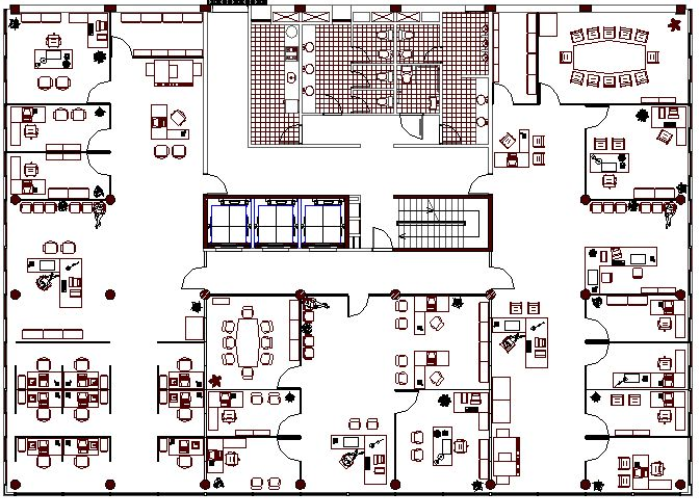
A building plan is a horizontal cross-section through the building seen from above — it shows the layout of rooms, walls, openings, and circulation. An elevation drawing is a vertical view of the building’s exterior face — it shows what the building looks like from outside and is the primary document for facade design. Both are essential parts of a complete architectural drawing set.
Do you handle society approval submissions for DHA and Bahria Town?
Yes — Dilaawar Interiors handles complete society approval submissions for DHA Lahore, Bahria Town Lahore, LDA, and other relevant authorities. We prepare all required documentation, submit on your behalf, respond to queries from the approval authority, and obtain final approval. Our familiarity with each authority’s specific requirements and processes significantly speeds up this typically frustrating stage.
Can I see 3D visualizations of my elevation before construction starts?
Yes — 3D elevation visualization is a standard part of our architectural design process. Before any construction begins, you will see photorealistic 3D renders of your building’s exterior from multiple viewpoints — showing the chosen materials, proportions, and design details exactly as they will appear when built. We make design refinements at this stage, not after materials have been purchased and installed.
What makes a good modern elevation design for a Pakistani home?
A great modern elevation for a Pakistani home successfully balances several factors — it has a clear, coherent design concept that gives the building a distinctive identity; it is proportionally resolved so that every element feels sized correctly relative to everything else; it uses materials that perform well in Pakistan’s climate and are maintainable over the long term; it responds appropriately to the specific site context and society regulations; it addresses Pakistani privacy requirements while maximizing natural light; and it has an entrance design that creates a strong, welcoming first impression.
Ready to Design Your Building Elevation in Lahore?
At Dilaawar Interiors, we believe every building deserves to be designed with intention — not improvised. Whether you’re building a new home, renovating an existing facade, or designing a commercial space that needs to command attention and communicate quality, our architectural team in Lahore has the expertise, the process, and the portfolio to deliver.
Here is what happens when you contact us:
- ✅ We schedule a free initial consultation at your convenience
- ✅ We visit your site and conduct a thorough assessment
- ✅ We develop design concept options with 3D visualization
- ✅ We prepare complete architectural drawings and handle society approvals
- ✅ We supervise construction to ensure your building looks exactly like the design
- ✅ You receive a building that you’re proud of — for decades
📞 Call Us: +923111147157
💬 WhatsApp: +923111147157
🌐 Website: dilaawarinteriors.com
📍 Visit Us: Lahore, Pakistan.
📧 Email: info@dilaawarinteriors.com
👉 Book Your Free Architecture Consultation
Written by the Design Team at Dilaawar Interiors — Lahore’s trusted name in affordable elegance. Have a question about your architectural project? Drop it in the comments below and our team will respond within 24 hours. 💬