7 Elements of Interior Design Pakistan: Ever walked into a beautifully designed home and wondered, “Why does this space feel so perfect?” Or visited a newly furnished house that somehow felt… off, even though the furniture was expensive and the paint was fresh?
Here’s the secret most Pakistani homeowners don’t know: Great interior design isn’t about buying expensive furniture or following the latest trends. It’s about understanding and skillfully combining seven fundamental elements that work together to create spaces that are both beautiful and functional.
These seven elements—line, color, form, space, texture, pattern, and light—are the building blocks every professional interior designer uses. Master them, and you can transform any room in your Lahore or Islamabad home from ordinary to extraordinary, regardless of your budget.
At Dilaawaar Interiors, we’ve designed 400+ homes across Pakistan, and in every single project, these seven elements are our foundation. A PKR 500,000 drawing room can look more impressive than a PKR 2 million one if these elements are used correctly. Conversely, ignoring these principles can make even the most expensive spaces feel uncomfortable and poorly designed.
In this comprehensive 2026 guide, you’ll discover each element in detail, learn how to apply them in Pakistani homes specifically, see real examples with budget breakdowns, and understand common mistakes to avoid. Whether you’re designing a 5-marla house in Lahore or a villa in Islamabad, these principles will help you create spaces that truly work.
🎨 Want Professional Design Help? Get a FREE design consultation from our Lahore-based experts!
WhatsApp: +923111147157
7 Elements of Interior Design Pakistan: What is Interior Design? (Understanding the Foundation)
Before diving into the seven elements, let’s establish what interior design actually means in the Pakistani context.
Interior Design Definition
The Professional Definition
interior design is the art and science of enhancing the interior of a building to create a healthier and more aesthetically pleasing environment for the people using the space. An interior designer plans, researches, coordinates, and manages such enhancement projects.
What This Means for Pakistani Homeowners
In Pakistan, interior design serves multiple purposes:
Functional Purpose:
- Maximizing small spaces (crucial in 5-marla houses)
- Creating storage solutions for joint family systems
- Designing for Pakistan’s climate (heat management, monsoon protection)
- Accommodating cultural needs (prayer spaces, guest areas)
Aesthetic Purpose:
- Creating impressive spaces for social gatherings
- Reflecting family status and taste
- Blending traditional Pakistani elements with modern comfort
- Making homes Instagram-worthy (important in 2026!)
Economic Purpose:
- Increasing property resale value (PKR 500,000-2 million boost)
- Making smart material choices that last in Pakistan’s climate
- Avoiding costly design mistakes
- Maximizing every rupee invested
Interior Design vs. Interior Decoration
The Key Difference
- Involves structural planning
- Requires technical knowledge
- Considers electrical, plumbing, HVAC
- Plans space utilization
- More complex and comprehensive
Interior Decoration:
- Focuses on aesthetics and furnishing
- Selecting furniture, colors, fabrics
- Adding decorative elements
- Styling existing spaces
- More surface-level
Both are important, but understanding the seven elements helps with both design and decoration decisions.
The 7 Essential Elements of Interior Design
Now, let’s explore each element in detail with Pakistani home examples and practical applications.
Element #1 – Line (Creating Direction & Movement)
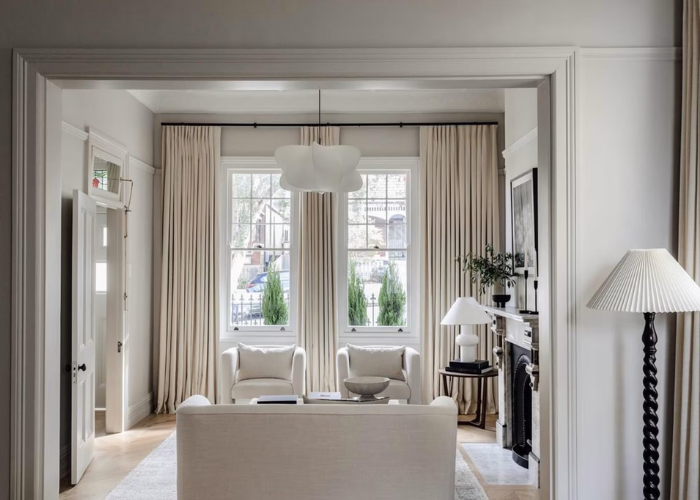
Lines are the most fundamental element in interior design. They guide the eye, create mood, and define spaces.
Understanding Lines in Interior Design
Types of Lines
Horizontal Lines
Characteristics:
- Create sense of stability and calm
- Make rooms appear wider and longer
- Ground the space
- Suggest rest and relaxation
Where You See Them in Pakistani Homes:
- Tables, sofas, beds
- Window frames, door frames
- Moldings and trim
- Kitchen countertops
- Shelving
How to Use Horizontal Lines:
Example – Drawing Room:
- Long sofa against wall (horizontal line)
- Paired with low coffee table
- Horizontal picture frames above sofa
- Effect: Room feels wider, more relaxed
- Cost impact: No additional cost, just smart arrangement
Vertical Lines
Characteristics:
- Create sense of height and grandeur
- Make ceilings appear higher
- Suggest strength and formality
- Draw eye upward
Where You See Them:
- Tall bookcases and cabinets
- Floor-to-ceiling curtains
- Vertical paneling
- Tall doorways and windows
- Pillars and columns
How to Use Vertical Lines:
Example – Small Bedroom in 5-Marla House:
- Floor-to-ceiling curtains (instead of window-height)
- Tall wardrobe reaching ceiling
- Vertical striped wallpaper on one wall
- Effect: 9-foot ceiling feels like 11 feet
- Cost: PKR 15,000-30,000 for full-length curtains (instead of standard)
Dynamic Lines (Curved, Diagonal, Zigzag)
Characteristics:
- Create energy and movement
- Add visual interest
- Can be exciting or calming (depending on curve)
- Break monotony
Where You See Them:
- Curved sofas and chairs
- Arched doorways
- Spiral staircases
- Zigzag patterns in rugs
- Curved ceiling designs
How to Use Dynamic Lines:
Example – Staircase Area:
- Curved staircase (dynamic line)
- Creates focal point
- More interesting than straight stairs
- Additional cost: PKR 80,000-150,000 over straight stairs
- Value added: Significant visual impact
Balancing Different Lines
The Rule of Balance
Too Many Horizontal Lines:
- Space feels flat, boring, lacking energy
- Can make room feel too squat
Too Many Vertical Lines:
- Space feels rigid, uncomfortable, tense
- Can be overwhelming
Too Many Dynamic Lines:
- Space feels chaotic, restless
- Can cause visual fatigue
The Perfect Mix
Ideal Balance for Pakistani Drawing Room:
- 70% horizontal lines (furniture, shelving)
- 20% vertical lines (curtains, tall cabinet)
- 10% dynamic lines (curved chair, decorative elements)
Cost to Implement: No additional cost, just thoughtful furniture selection and arrangement
Lines in Pakistani Traditional Design
Islamic Architecture Influence
Geometric Lines:
- Jali work (intricate geometric patterns)
- Arches in doorways
- Symmetrical layouts
Cost for Traditional Elements:
- Wooden jali panel: PKR 30,000-80,000
- Arched doorway: PKR 40,000-100,000 extra over standard
📐 Need Help with Space Planning Using Lines? Our designers create detailed floor plans optimized for flow and balance! Contact Us
Element #2 – Color (The Emotional Foundation)
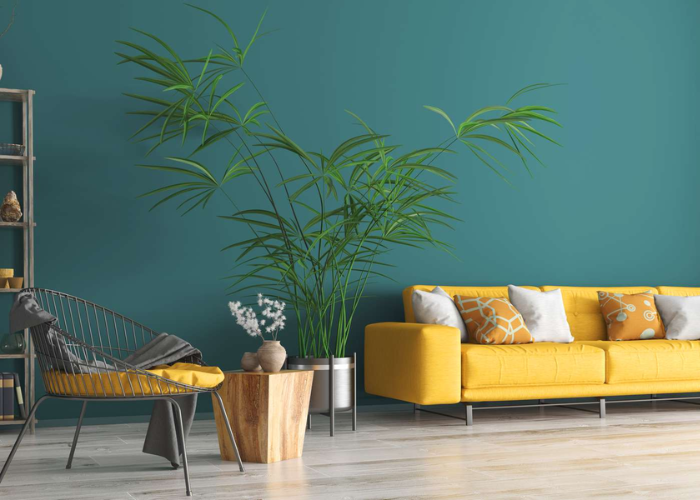
Color is arguably the most powerful element in interior design. It sets mood, creates illusions of space, and ties everything together.
Understanding Color Theory
The Color Wheel Basics
Primary Colors
- Red, Blue, Yellow
- Cannot be created by mixing other colors
- Foundation of all other colors
Secondary Colors
- Orange, Green, Purple
- Created by mixing two primary colors
Tertiary Colors
- Red-orange, yellow-orange, yellow-green, etc.
- Created by mixing primary and secondary colors
Color Psychology in Pakistani Homes
Warm Colors (Red, Orange, Yellow)
Effects & Uses
Psychological Impact:
- Create energy and warmth
- Stimulate appetite and conversation
- Make spaces feel cozier (but smaller)
- Increase heart rate and energy
Best Used In:
Living Rooms & Dining Rooms:
- Warm beige, terracotta, soft orange
- Encourages family interaction
- Popular in Pakistan: Yes, traditional homes
Kitchens:
- Warm yellows and creams
- Stimulates appetite
- Creates welcoming cooking environment
Example Color Scheme:
- Base: Warm beige walls
- Accent: Terracotta cushions and curtains
- Highlight: Gold picture frames
- Cost: Paint PKR 20,000, accessories PKR 30,000
- Total: PKR 50,000 for complete room transformation
Cool Colors (Blue, Green, Purple)
Effects & Uses
Psychological Impact:
- Create calm and relaxation
- Make spaces feel larger
- Lower blood pressure and heart rate
- Can feel cold if overused
Best Used In:
Bedrooms:
- Soft blues, sage green, lavender
- Promotes restful sleep
- Perfect for Lahore’s hot climate: Psychologically cooling
Bathrooms:
- Aqua, turquoise, sea green
- Fresh, clean feeling
Study/Office:
- Deep blue, forest green
- Increases focus and concentration
Example Bedroom:
- Base: Soft blue-grey walls
- Accent: White furniture and curtains
- Highlight: Navy blue cushions
- Cost: Paint PKR 15,000, bedding PKR 25,000
- Effect: Cool, calming, sleep-friendly
Neutral Colors (White, Beige, Grey, Brown)
The Foundation of Pakistani Homes
Why Neutrals Work:
- Timeless, never go out of style
- Make spaces feel larger
- Provide backdrop for colorful accessories
- Easy to change décor without repainting
Most Popular in Pakistan:
Beige/Cream:
- Usage: 60% of Pakistani homes
- Why: Warm, welcoming, traditional
- Cost: PKR 15,000-25,000 for standard room
Off-White:
- Usage: Modern homes, apartments
- Why: Clean, fresh, spacious feeling
- Cost: PKR 15,000-25,000 for standard room
Grey:
- Usage: Trending in 2026
- Why: Sophisticated, modern
- Cost: PKR 18,000-30,000 (premium paints)
The 60-30-10 Color Rule
What It Means
60% Dominant Color:
- Walls, large furniture
- Sets the overall tone
- Usually neutral in Pakistani homes
30% Secondary Color:
- Smaller furniture, curtains
- Complements dominant color
- Adds personality
10% Accent Color:
- Cushions, artwork, decorative items
- Adds pops of color
- Easy to change with trends
Example Application – Drawing Room
60% Dominant: Beige walls and large sofa (PKR 120,000)
30% Secondary: Maroon curtains and accent chairs (PKR 60,000)
10% Accent: Gold cushions and brass décor (PKR 20,000)
Total Room: PKR 200,000
Result: Professionally balanced, cohesive design
Color & Light in Pakistan’s Climate
How Lahore’s Sun Affects Colors
South-Facing Rooms (Intense Sun):
- Colors appear warmer and brighter
- Recommendation: Use cool colors to balance
- Avoid: Warm colors (will feel too hot)
North-Facing Rooms (Less Sun):
- Colors appear cooler and darker
- Recommendation: Use warm colors
- Best choice: Warm beige, soft yellows
East-Facing Rooms (Morning Sun):
- Morning: Warm light
- Afternoon/Evening: Cooler
- Recommendation: Balanced neutrals
West-Facing Rooms (Afternoon/Evening Sun):
- Harsh afternoon heat and light
- Recommendation: Cool colors to counteract heat
- Best choice: Soft blues, greens
Common Color Mistakes in Pakistani Homes
Mistake #1: All Dark Colors in Small Room
The Problem:
- Makes room feel cramped and cave-like
- Common in trying to look “rich” or “formal”
The Solution:
- Use dark colors as accents only (10-30%)
- Keep walls light
Mistake #2: Too Many Colors
The Problem:
- Room feels chaotic, no focal point
- Each family member choosing different colors
The Solution:
- Stick to 3-4 colors maximum
- Use 60-30-10 rule
Mistake #3: Ignoring Undertones
The Problem:
- Beige with pink undertone + beige with yellow undertone = clash
- Looks “off” but can’t identify why
The Solution:
- Test paint samples in actual room lighting
- Ensure undertones complement each other
Element #3 – Form (Shape & Structure)
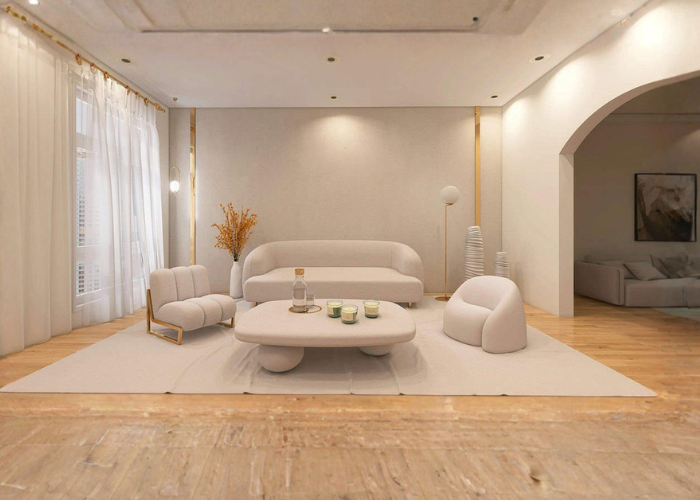
Form refers to the shape of the room itself and the objects within it. It’s the three-dimensional aspect of design.
Understanding Form
Two Types of Form
Geometric Form
Characteristics:
- Clean lines, sharp edges
- Man-made, structured
- Squares, rectangles, circles, triangles
Examples in Pakistani Homes:
- Modern furniture (sofas, tables, cabinets)
- Kitchen cabinets
- Square/rectangular rugs
- Geometric light fixtures
When to Use:
- Modern/Contemporary interiors: Primary form
- Traditional interiors: Secondary to organic forms
- Small spaces: Creates sense of order
Organic/Natural Form
Characteristics:
- Flowing, curved, irregular
- Found in nature
- More relaxed and informal
Examples in Pakistani Homes:
- Curved sofas and chairs
- Round coffee tables
- Indoor plants
- Decorative stones/pebbles
- Irregular-shaped mirrors
When to Use:
- Traditional Pakistani interiors: Curved wooden furniture
- Softening modern spaces: Add curves to break rigidity
- Creating comfort: Organic forms feel more welcoming
Balancing Geometric & Organic Forms
The Rule of Balance
Too Many Geometric Forms:
- Space feels rigid, cold, unwelcoming
- Common in overly modern designs
Too Many Organic Forms:
- Space feels unstructured, chaotic
- Can look messy
Ideal Balance
Modern Pakistani Drawing Room:
- 70% geometric: Rectangular sofa, square coffee table, geometric rug
- 30% organic: Curved accent chair, round side table, plants
- Result: Modern but warm and inviting
Traditional Pakistani Drawing Room:
- 50% geometric: Basic furniture structure
- 50% organic: Curved carved wood details, round tables, flowing curtains
- Result: Traditional elegance with structure
Form in Pakistani Furniture
Traditional Carved Wood Furniture
Form Characteristics:
- Base structure: Geometric (rectangle, square)
- Details: Organic (flowing carvings, curves)
- Perfect balance of both forms
Cost:
- Chiniot carved sofa set: PKR 300,000-600,000
- Worth it: Timeless design, heirloom quality
Modern Minimalist Furniture
Form Characteristics:
- Primarily geometric
- Clean lines, minimal curves
- Functional design
Cost:
- Modern sofa set: PKR 150,000-350,000
- Advantage: More affordable, contemporary
Element #4 – Space (The Canvas of Design)
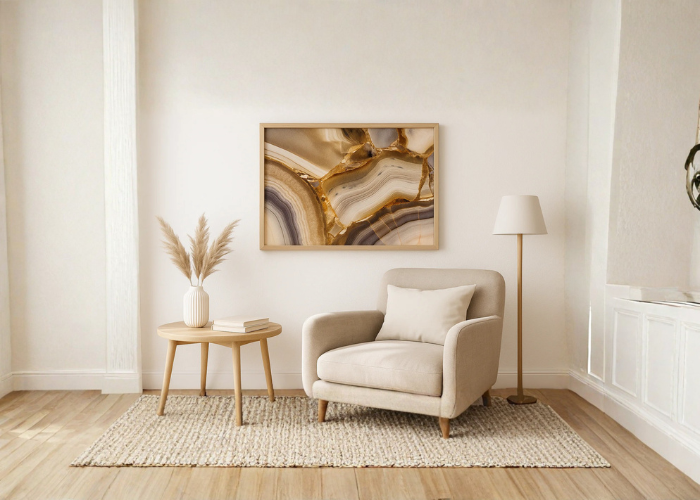
Space is the foundation upon which all other elements work. It’s both the physical area of the room and how you use it.
Understanding Space
Two Types of Space
Positive Space
Definition:
- Space occupied by objects
- Furniture, décor, fixtures
In Pakistani Homes:
- All your furniture and belongings
- The “filled” areas of rooms
H5: Negative Space
Definition:
- Empty space between and around objects
- Often called “white space”
In Pakistani Homes:
- Walking paths
- Clear wall areas
- Open floor space
- Space around furniture
The Balance of Positive & Negative Space
Common Problem in Pakistani Homes
Too Much Positive Space (Over-Furnished):
- Room feels cramped and cluttered
- Difficult to move around
- Visually overwhelming
- Very common in Pakistani homes: Trying to fit too much
Too Much Negative Space (Under-Furnished):
- Room feels empty and unwelcoming
- Echoes, cold feeling
- Looks unfinished
- Less common but happens in modern minimalist attempts
The Ideal Balance
Drawing Room (12×14 feet):
- 60-70% positive space: Furniture and décor
- 30-40% negative space: Clear pathways, breathing room
- Result: Comfortable, functional, beautiful
Bedroom (10×12 feet):
- 50-60% positive space: Bed, wardrobe, side tables
- 40-50% negative space: Walking space, clear floor
- Result: Relaxing, uncluttered
Space Planning for Pakistani Homes
Small Spaces (5-Marla Houses)
Drawing Room (10×12 feet)
Smart Space Usage:
- L-shaped sofa: Saves space vs. separate pieces
- Wall-mounted TV: Frees floor space
- Coffee table with storage: Dual function
- Vertical storage: Tall, narrow cabinets
Cost-Effective Space Maximization:
- L-sofa: PKR 80,000-150,000
- Wall mount: PKR 3,000-8,000
- Coffee table: PKR 15,000-30,000
- Total: PKR 98,000-188,000
- Result: Feels like 12×14 room!
Large Spaces (10-Marla, 1-Kanal Houses)
Drawing Room (18×20 feet)
Avoiding Empty Feel:
- Zone the space: Seating area + reading nook
- Larger furniture: Bigger sofa, substantial coffee table
- Area rugs: Define zones
- Statement pieces: Large artwork, big plants
Creating Intimacy in Large Space:
- Multiple seating groups: PKR 400,000-700,000
- Area rugs (2): PKR 60,000-150,000
- Large artwork: PKR 30,000-80,000
- Total: PKR 490,000-930,000
- Result: Grand yet welcoming
Traffic Flow & Space
Main Pathways
Minimum Width Requirements:
- Primary walkway: 3-4 feet minimum
- Secondary paths: 2-2.5 feet minimum
- Around furniture: 18-24 inches minimum
Common Mistakes
Blocking Natural Paths:
- Furniture placed in obvious walking routes
- Having to squeeze between items
- Solution: Map pathways before furniture placement
No Negative Space:
- Furniture pushed against all walls
- Every surface covered with items
- Solution: Leave some walls bare, clear some surfaces
Element #5 – Texture (Adding Depth & Interest)
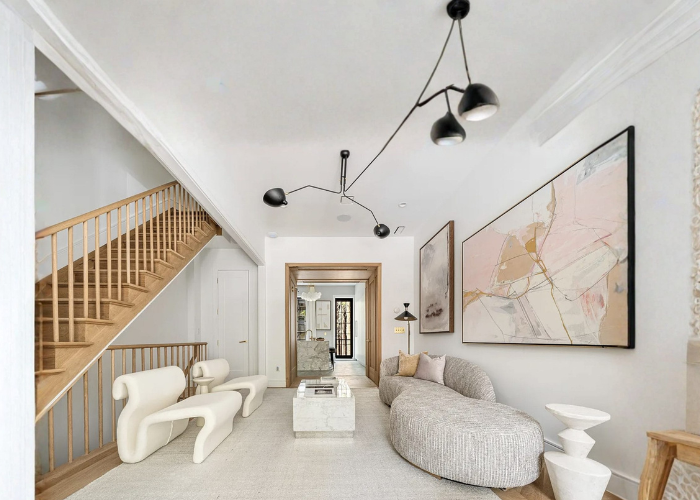
Texture is the surface quality of objects—how they feel and how they appear to feel. It’s often the most overlooked element but adds tremendous depth.
Understanding Texture
Two Types of Texture
Actual Texture (Tactile)
Definition:
- How surfaces actually feel when touched
- Physical, three-dimensional quality
Examples in Pakistani Homes:
- Rough brick walls
- Smooth marble floors
- Soft velvet cushions
- Woven rattan furniture
- Carved wooden furniture
Visual Texture
Definition:
- How surfaces appear to feel
- Created through patterns and colors
- Two-dimensional illusion
Examples:
- Faux wood wallpaper
- Printed fabric that looks woven
- Painted texture on walls
- Photographs of textured surfaces
Using Texture in Pakistani Interiors
High-Texture vs. Low-Texture
High-Texture Surfaces
Characteristics:
- Rough, heavily textured, tactile
- Absorb light
- Feel casual, warm, cozy
Examples:
- Brick walls
- Stone cladding
- Jute rugs
- Chunky knit throws
- Carved wood panels
Best Used:
- Traditional Pakistani interiors
- Accent walls
- Creating warmth in modern spaces
Cost Examples:
- Exposed brick wall treatment: PKR 200-400 per sq ft
- Stone cladding: PKR 300-600 per sq ft
- Jute rug (8×10): PKR 15,000-40,000
Low-Texture Surfaces
Characteristics:
- Smooth, sleek, minimal texture
- Reflect light
- Feel modern, clean, formal
Examples:
- Polished marble
- Glass surfaces
- High-gloss paint
- Smooth leather
- Satin fabrics
Best Used:
- Modern Pakistani interiors
- Small spaces (reflects light)
- Creating sophistication
Cost Examples:
- Polished marble flooring: PKR 200-500 per sq ft
- Glass furniture: PKR 15,000-50,000 per piece
- High-gloss paint: PKR 100-150 per sq ft
Layering Texture
The Rule of Three Textures
Why It Works:
- Creates depth and interest
- Prevents monotony
- Adds sophistication
Example – Modern Pakistani Bedroom:
Texture #1 – Smooth:
- High-gloss painted walls: PKR 25,000
Texture #2 – Medium:
- Linen curtains and bedding: PKR 35,000
Texture #3 – Rough:
- Jute rug and woven basket: PKR 20,000
Total: PKR 80,000 Result: Layered, interesting, professionally designed feel
Texture in Traditional Pakistani Design
Common Textures
Wood Carvings:
- Adds high texture and cultural authenticity
- Cost: PKR 30,000-150,000 for carved panels
Embroidered Textiles:
- Cushions, curtains, throws
- Cost: PKR 2,000-8,000 per cushion
Brass & Copper:
- Decorative items with aged texture
- Cost: PKR 3,000-15,000 per piece
Common Texture Mistakes
Mistake #1: All Smooth Surfaces
The Problem:
- Room feels sterile, cold, like a showroom
- Common in overly modern designs
The Solution:
- Add textured rug, woven baskets, rough pottery
Mistake #2: All Rough Textures
The Problem:
- Room feels heavy, overwhelming, rustic
- Can look dated or unrefined
The Solution:
- Balance with smooth glass, polished metal, sleek surfaces
Element #6 – Pattern (Adding Visual Interest)
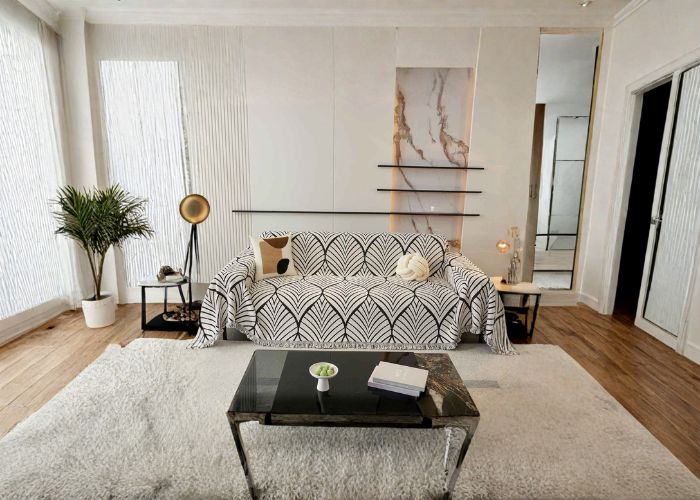
Pattern is the repetition of a design or motif. It adds energy, personality, and visual interest to spaces.
Understanding Pattern
Types of Patterns
Geometric Patterns
Characteristics:
- Structured, regular, mathematical
- Squares, circles, hexagons, triangles
- Modern, organized feel
Popular in Pakistani Homes:
- Moroccan tile patterns
- Geometric rugs
- Hexagon tiles (trending in 2026)
- Islamic geometric patterns
Cost Examples:
- Geometric rug (6×8): PKR 20,000-60,000
- Geometric tile backsplash: PKR 200-500 per sq ft
Organic Patterns
Characteristics:
- Natural, flowing, irregular
- Floral, botanical, animal prints
Popular in Pakistani Homes:
- Floral curtains and cushions
- Tree-of-life motifs
- Paisley patterns (very traditional)
Cost Examples:
- Floral curtains: PKR 15,000-45,000 per pair
- Botanical wallpaper: PKR 180-400 per sq ft
Stripes
Characteristics:
- Linear, directional
- Can be horizontal, vertical, diagonal
Effects:
- Vertical stripes: Make ceiling appear higher
- Horizontal stripes: Make room appear wider
Cost Examples:
- Striped rug: PKR 18,000-50,000
- Striped cushions: PKR 1,500-4,000 each
Traditional/Cultural Patterns
Pakistani-Specific:
- Truck art patterns (trending in modern homes!)
- Mughal-inspired motifs
- Islamic calligraphy patterns
Cost Examples:
- Truck art canvas: PKR 15,000-50,000
- Traditional cushion covers: PKR 2,000-6,000 each
Mixing Patterns Successfully
The Pattern Mixing Rule
Use 3 Patterns Maximum:
- Large-scale pattern: Bold, dominant (curtains, rug)
- Medium-scale pattern: Moderate size (cushions)
- Small-scale pattern: Subtle, delicate (throw, small décor)
Keep Color Palette Consistent:
- All patterns should share at least one common color
- Prevents chaotic, mismatched look
Example – Pakistani Drawing Room
Pattern #1 (Large):
- Floral curtains in cream, maroon, gold: PKR 30,000
Pattern #2 (Medium):
- Geometric cushions in maroon, gold: PKR 8,000 (4 cushions)
Pattern #3 (Small):
- Striped throw in cream, gold: PKR 5,000
Total: PKR 43,000 Common colors: Cream, maroon, gold Result: Cohesive, professionally layered
Pattern in Pakistani Traditional Design
Common Traditional Patterns
Paisley:
- Very traditional Pakistani motif
- Use in textiles, rugs
Jali Work (Lattice):
- Geometric screening patterns
- Use in wooden panels, room dividers
Calligraphy:
- Arabic script patterns
- Use in wall art, textiles
Floral Motifs:
- Traditional embroidery patterns
- Use in cushions, curtains
Element #7 – Light (The Mood Setter)
Light is perhaps the most important yet most neglected element in Pakistani homes. It affects how we see every other element.
Understanding Light
Natural Light
Maximizing Natural Light
In Lahore’s Climate:
- Abundant sunshine (300+ days/year)
- Challenge: Too much heat in summer
- Solution: Light management, not blocking
Strategies:
- Sheer curtains (filter light without blocking)
- Mirrors to bounce light
- Light wall colors to reflect
- Clean windows regularly (dust)
Cost:
- Sheer curtains: PKR 10,000-25,000 per window
- Large mirrors: PKR 15,000-40,000
- Total investment: PKR 50,000-120,000
- Result: 40% brighter rooms, free cooling effect
Artificial Lighting
Three Layers of Lighting
Layer #1 – Ambient Lighting:
- Purpose: Overall illumination
- Examples: Ceiling lights, chandeliers
- Cost: PKR 8,000-80,000 per room
Layer #2 – Task Lighting:
- Purpose: Specific activities (reading, cooking)
- Examples: Desk lamps, under-cabinet kitchen lights
- Cost: PKR 3,000-15,000 per fixture
Layer #3 – Accent Lighting:
- Purpose: Highlight features, create mood
- Examples: Spotlights on art, LED strips
- Cost: PKR 5,000-25,000 per installation
Lighting for Pakistani Rooms
Drawing Room Lighting
Complete Lighting Package:
- Chandelier (ambient): PKR 30,000-100,000
- 2 table lamps (task): PKR 10,000-30,000
- LED strips (accent): PKR 8,000-20,000
- Total: PKR 48,000-150,000
- Result: Professionally lit, impressive space
Bedroom Lighting
Layered Approach:
- Ceiling light (ambient): PKR 8,000-25,000
- Bedside lamps (task): PKR 6,000-18,000 (pair)
- Reading light (task): PKR 3,000-8,000
- Total: PKR 17,000-51,000
- Result: Functional, comfortable, romantic
Common Lighting Mistakes
Mistake #1: Only Overhead Lighting
The Problem:
- Harsh shadows
- Flat, uninviting space
- Can’t adjust mood
The Solution:
- Add table lamps and accent lights
- Create layered lighting
Mistake #2: Wrong Color Temperature
The Problem:
- Cool white (bluish) in bedrooms = poor sleep
- Warm white (yellowish) in study = poor concentration
The Solution:
- Bedrooms: Warm white (2700K-3000K)
- Study/Office: Cool white (4000K-5000K)
- Living areas: Warm white (3000K-3500K)
Combining All 7 Elements: Complete Room Examples
Pakistani Drawing Room Design
Traditional Style (12×14 feet)
Line:
- Horizontal lines from long sofa
- Vertical lines from floor-length curtains
- Curved lines in carved wooden furniture
Color:
- 60% Cream walls and large sofa
- 30% Maroon curtains and accent chairs
- 10% Gold cushions and brass décor
Form:
- Geometric sofa structure
- Organic carved wood details
Space:
- 65% positive (furniture)
- 35% negative (pathways)
Texture:
- Smooth walls
- Carved wood (high texture)
- Velvet cushions (soft texture)
Pattern:
- Floral curtains (large pattern)
- Geometric cushions (medium)
- Striped rug (subtle)
Light:
- Crystal chandelier (ambient)
- Table lamps (task/accent)
- Natural light from large window
Total Budget: PKR 450,000-700,000 Result: Impressive, traditional, welcoming
Modern Bedroom Design
Contemporary Style (10×12 feet)
Line:
- Clean horizontal and vertical lines
- Minimal curves
Color:
- 60% Soft grey walls
- 30% White furniture
- 10% Navy blue accents
Form:
- Primarily geometric
- One curved chair for softness
Space:
- 55% positive (bed, wardrobe)
- 45% negative (clear floor, breathing room)
Texture:
- Smooth painted walls
- Linen bedding (medium texture)
- Jute rug (rough texture)
Pattern:
- Minimal – geometric throw pillows only
Light:
- Ceiling fixture (ambient)
- Bedside lamps (task)
- LED strip behind headboard (accent)
Total Budget: PKR 280,000-450,000 Result: Calm, modern, restful
Budget Guide for Implementing Design Elements
Small Room (10×12 feet) – All Elements
Budget Option (PKR 100,000-150,000)
- Paint (color): PKR 15,000-20,000
- Basic furniture (form, line): PKR 50,000-80,000
- Lighting: PKR 15,000-25,000
- Textiles (texture, pattern): PKR 20,000-25,000
Mid-Range (PKR 200,000-350,000)
- Quality paint + accent wall: PKR 25,000-40,000
- Better furniture: PKR 100,000-180,000
- Layered lighting: PKR 30,000-50,000
- Quality textiles + rug: PKR 45,000-80,000
Premium (PKR 500,000-800,000)
- Premium paint + wallpaper: PKR 40,000-70,000
- Designer furniture: PKR 250,000-450,000
- Complete lighting design: PKR 80,000-120,000
- Luxury textiles + rug: PKR 130,000-160,000
Common Mistakes When Using Design Elements
Mistake #1: Ignoring One or More Elements
The Problem:
- Focus only on color, ignore texture and pattern
- Room feels incomplete, “something missing”
The Solution:
- Consciously address all seven elements
- Create checklist for each room
Mistake #2: Using Elements Without Balance
The Problem:
- Too much of one element
- Example: 10 different patterns, no solid colors
The Solution:
- Use 60-30-10 rule for multiple elements
- Create hierarchy
Mistake #3: Following Trends Blindly
The Problem:
- Trendy color/pattern doesn’t suit your home
- Waste of money when trend passes
The Solution:
- Use timeless elements (60-70%)
- Trend-driven accents (30-40%) that are easy to change
Why Choose Dilaawaar Interiors
Our Expertise with Design Elements
✅ 400+ Homes Designed: Mastery of all 7 elements
✅ Pakistani Context: We understand local climate, culture, needs
✅ Budget Flexibility: From PKR 100,000 to luxury projects
✅ Holistic Approach: Never neglect any element
Our Process
Step 1: Free Consultation
- Assess your space
- Understand your style preferences
- Evaluate current elements
Step 2: Design Proposal
- 3D visualization showing all elements
- Color palettes, textures, patterns
- Lighting plan
- Furniture layouts (line, form, space)
Step 3: Implementation
- Material sourcing
- Quality control
- Expert installation
- Perfect execution of design elements
Ready to Transform Your Home?
Get Your FREE Design Consultation
Our team will:
✓ Analyze your space using all 7 elements
✓ Create custom color palette
✓ Suggest texture and pattern combinations
✓ Design lighting plan
✓ Provide 3D visualization
✓ Give detailed budget breakdown
Contact Information
📞 Call: +923111147157
💬 WhatsApp: +923111147157
📧 Email: info@dilaawarinteriors.com
🌐 Website: www.dilaawarinteriors.com
Serving: Lahore, Pakistan.
March 2026 Special Offer
🎁 FREE design consultation (worth PKR 25,000)
🎁 FREE 3D visualization of one room
🎁 10% discount on complete interior design package
🎁 FREE element analysis of your current space
Final Thoughts: Master the Elements, Master Your Space
Understanding the seven elements of interior design—line, color, form, space, texture, pattern, and light—is like learning the alphabet before writing. Once you master these fundamentals, you can create beautiful, functional spaces regardless of budget.
At Dilaawaar Interiors, we believe affordable elegance means using these elements skillfully to create maximum impact with every rupee spent. A PKR 300,000 room designed with proper attention to all seven elements will always outshine a PKR 1 million room that ignores these fundamentals.
Whether you’re designing a 5-marla house in Johar Town or a villa in DHA, these elements are your toolkit for creating spaces that are not just beautiful, but truly work for your life.
Let us help you master these elements and transform your house into a home.